Cortina Etiquette: What to Do During the Break
The Cortina Etiquette: What to Do During the Break Between Tandas
For newcomers to tango milongas, the cortina can be one of the most confusing moments of the evening. The music you were dancing to ends, a short clip of non-tango music plays, and suddenly everyone is leaving the floor. What just happened? What are you supposed to do? And why does this ritual exist in the first place?
Understanding the cortina is essential to navigating milonga culture with confidence. It is one of those small traditions that carries enormous social significance.
What Is a Cortina?
The word cortina means "curtain" in Spanish, and that is precisely its function — it draws a curtain between one tanda and the next. A tanda is a set of songs, typically three or four, played by the same orchestra in the same style. The cortina is a brief piece of non-tango music (often 30 to 60 seconds) that signals the end of the tanda and the beginning of a social pause.
Think of it as the scene change in a play. The lights come up, the set changes, and the audience — the dancers — prepare for the next act.
The Core Rule: Clear the Floor
The most important cortina etiquette is simple: when the cortina plays, you leave the dance floor. This applies to everyone, regardless of how wonderful your last tanda was. Staying on the floor through a cortina signals that you want to continue dancing with the same partner for the next tanda, which breaks the social convention that each tanda is a fresh choice.
Some dancers do occasionally dance through the cortina together, but this should be a mutual, deliberate decision — never an assumption. If you are not sure whether your partner wants to continue, the courteous default is to leave the floor.
What to Do When the Cortina Plays
Here is a practical guide to those ninety seconds between tandas:
- Thank your partner: As the last song of the tanda ends and the cortina begins, thank your partner warmly. A simple "thank you, that was lovely" is perfect. This is not the moment for a detailed critique or an extended conversation.
- Walk your partner back: Traditionally, the leader escorts the follower back towards their seat or at least to the edge of the floor. This is a gracious gesture that is appreciated even in informal milongas.
- Return to your seat: Go back to your table or your spot by the wall. This is your base from which you will use the cabeceo to find your next partner.
- Rehydrate and reset: The cortina is a natural moment to take a sip of water, adjust your shoes, catch your breath, and prepare for the next tanda.
- Listen to what is coming: Experienced dancers use the first notes of the next tanda to identify the orchestra and style. This helps them decide whom to invite — you might want a different partner for a dramatic Pugliese tanda than for a playful D'Arienzo set.
The Social Function of the Cortina
The cortina serves several essential social purposes that are not immediately obvious to newcomers:
- It provides an exit: Without the cortina, there would be no graceful way to stop dancing with someone. The cortina gives everyone a natural, face-saving endpoint. You never need to reject a partner mid-tanda — you simply do not invite them for the next one.
- It creates choice: The cortina resets the room, allowing everyone to choose fresh partners. This keeps the milonga dynamic and ensures that dancing is always a matter of mutual choice.
- It varies the experience: By changing partners between tandas, dancers experience different embraces, different interpretations, different energies. This variety is one of the great joys of social tango.
- It paces the evening: Milongas can last four or five hours. The regular breaks between tandas help dancers pace themselves, preventing exhaustion and keeping the energy sustainable.
Common Cortina Mistakes
Even experienced dancers sometimes get the cortina wrong. Here are the most common errors:
- Dancing through the cortina accidentally: If you are new, you might not recognise the cortina and keep dancing. This is embarrassing but forgivable — just apologise and leave the floor when you realise.
- Asking someone to dance during the cortina: The invitation for the next tanda should happen as the new tanda begins, not during the cortina. Use the cortina to position yourself for the cabeceo.
- Rushing back to the floor: Some dancers leap onto the floor the instant the new tanda begins, before they have properly identified the music or chosen a partner. Take a moment to listen, look, and choose.
- Monopolising a partner: Dancing more than two consecutive tandas with the same person is generally considered excessive at most milongas. It can create an awkward social dynamic and deprive both of you of the variety that makes milongas special.
Cortina Variations
Not all milongas handle cortinas the same way. Some variations you might encounter:
- Musical cortinas: Most DJs play a short clip of non-tango music — anything from jazz to pop to classical. Some DJs are known for creative or humorous cortina choices.
- Silent cortinas: Some milongas simply have a pause between tandas. This can be disorienting if you are not expecting it.
- No cortinas: Some informal milongas or prácticas do not use cortinas at all, playing continuous music. In these settings, the social conventions are more relaxed.
- Long cortinas: At some events, longer cortinas allow for live performances, announcements, or simply more social time.
The Art of the Cortina Moment
There is something lovely about the cortina if you learn to appreciate it. It is a moment of anticipation. As you sit and listen to the first notes of the new tanda, you scan the room. You catch someone's eye. A smile, a nod — and you are on your feet, walking towards a new embrace, a new musical conversation, a new three-song story.
This rhythm of connection and release, of choosing and being chosen, of familiar music and new partnerships — this is the heartbeat of the milonga. The cortina is what makes it pulse.
"The cortina is not an interruption. It is the breath between sentences — the pause that gives meaning to what comes next."
Experience Milonga Culture in London
London's milongas range from strictly traditional to warmly informal, each with its own approach to cortinas and tanda structure. The best way to learn milonga etiquette is to experience it firsthand, surrounded by welcoming dancers who remember their own first cortina confusion.
Visit TangoLife.london to find milongas across London where you can practise your cortina etiquette and discover the beautiful rhythm of social tango.
Related Articles
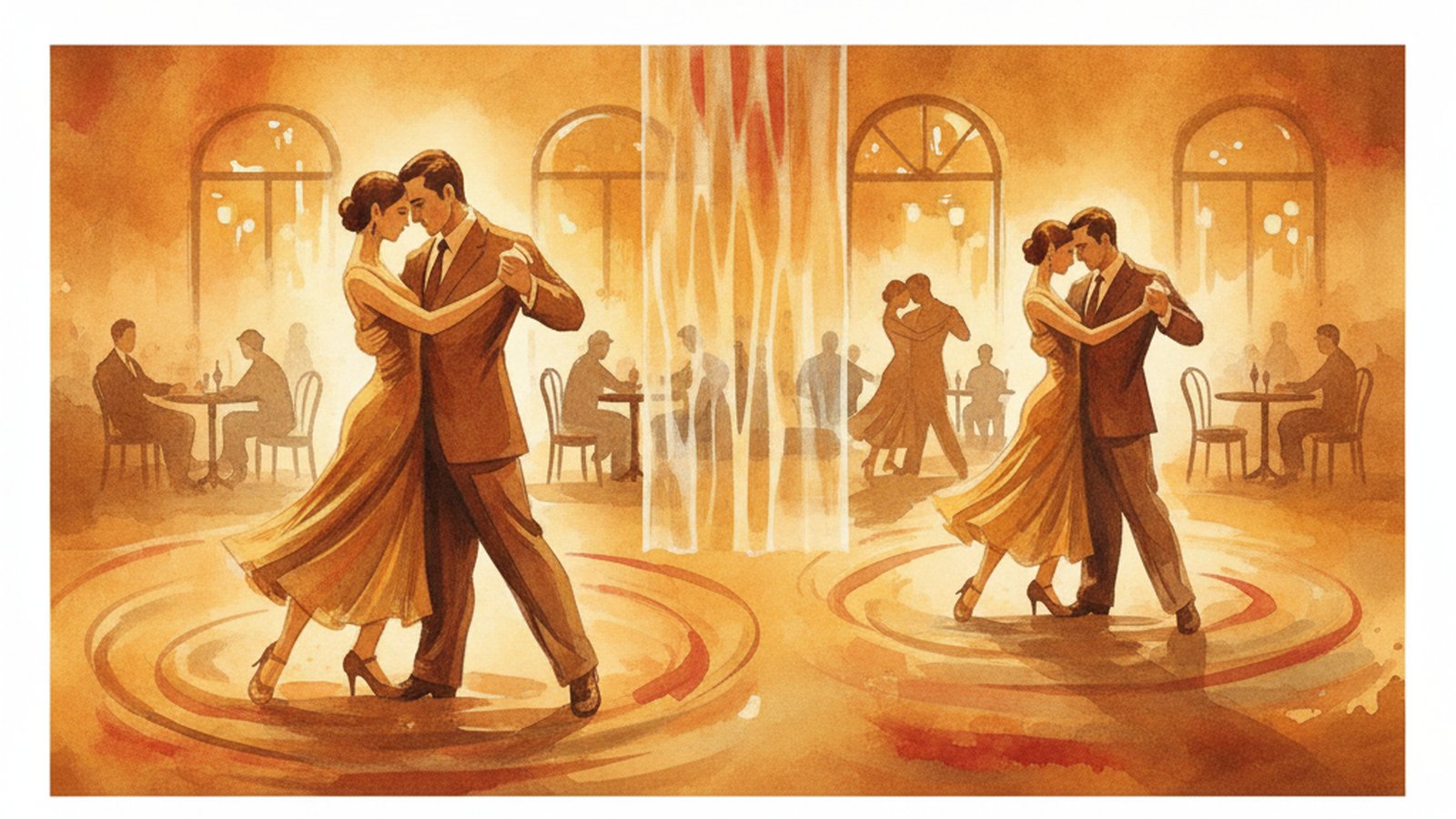
Cortina Etiquette: What to Do Between Tandas at a Milonga
The cortina is only forty seconds long, but it is where invitations are made, partnerships end gracefully and the room resets. Here is how to use it well at London milongas.
Tango Nerves: Dancing With More Experienced Partners in London
Freezing up at the thought of dancing with the best dancer in the room? Here's what experienced partners actually want, and how to get out of your own way at London milongas.
How to Politely Decline a Tango Dance (And Why It's OK)
Saying no to a tango dance isn't rude — it's an essential part of milonga etiquette. Learn how to decline gracefully and why it strengthens the community.