How to Ask Someone to Dance Without Using Words
The Silent Invitation
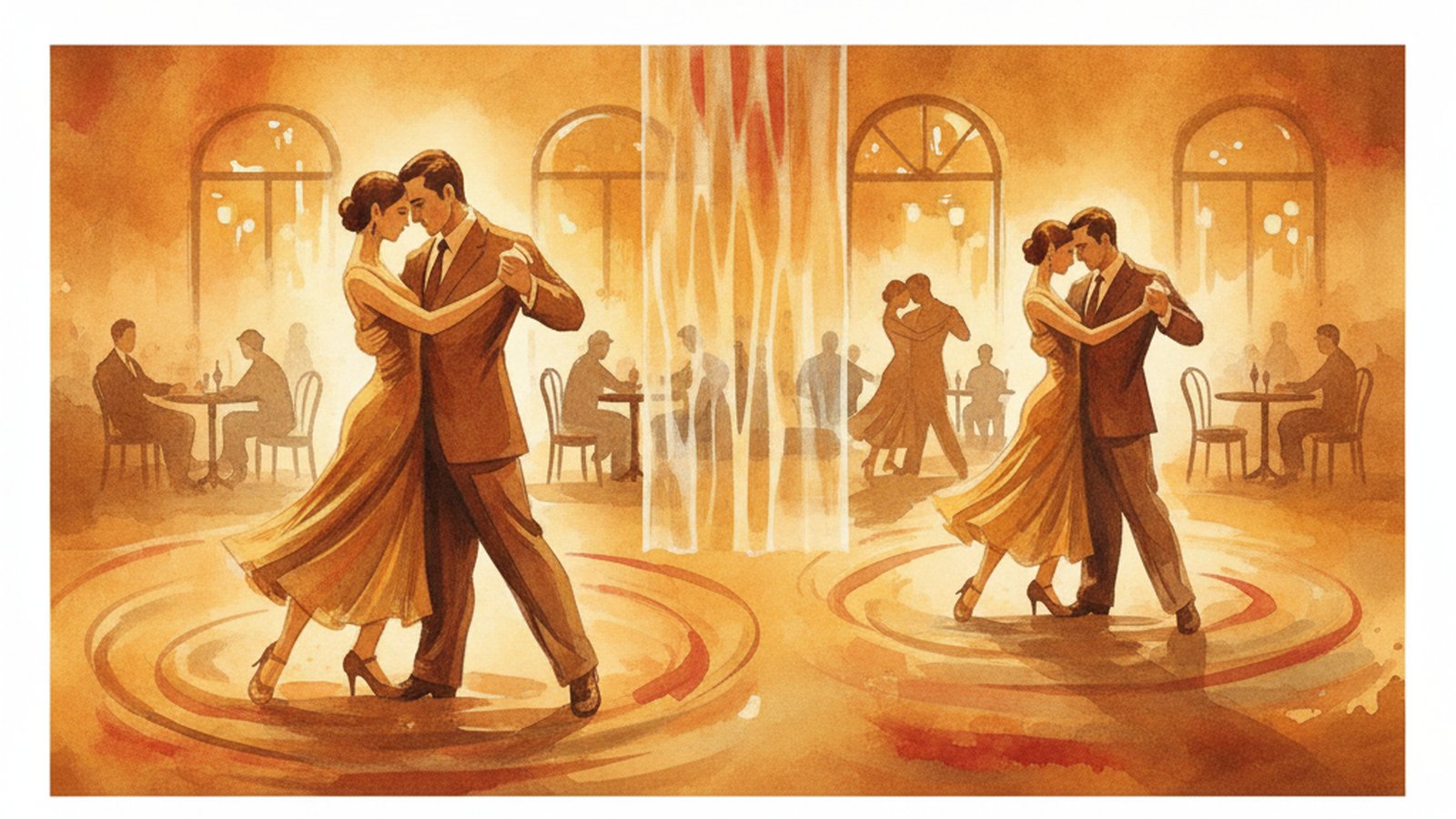
Imagine you are at a milonga. The cortina fades, the first notes of a new tanda begin, and you want to dance. In most social dance scenes, you would walk up to someone and ask them verbally. In Argentine tango, there is another way, an older, more elegant, and remarkably effective system of non-verbal invitation called the cabeceo.
The cabeceo (pronounced ca-beh-SEH-oh) and its companion, the mirada, form the traditional method of inviting and accepting a dance in tango. Together, they create a system that is discreet, respectful, and surprisingly liberating for everyone involved. Once you understand how it works, you may wonder why every social dance does not use it.
What Is the Cabeceo?
The word cabeceo comes from cabeza, the Spanish word for head. It refers to a subtle nod of the head used to confirm a dance invitation. The mirada means look or gaze, and it refers to the eye contact that precedes the nod.
The process works like this:
- As a new tanda begins, a dancer who wants to invite someone looks across the room at that person and tries to catch their eye. This is the mirada.
- If the other person is interested, they return the gaze and hold eye contact. This mutual look is the moment of negotiation.
- The person initiating the invitation gives a small, clear nod. This is the cabeceo.
- The other person nods back or smiles in acceptance.
- The inviter walks across the room to meet their partner, and they proceed to the dance floor together.
The entire exchange takes a few seconds and happens without a single word being spoken.
Why the Cabeceo Exists
The cabeceo is not merely a quaint tradition. It solves real social problems that exist in any dance community.
It Protects the Right to Say No
This is the cabeceo's greatest gift. When someone walks up to you and asks you to dance verbally, in front of other people, saying no is awkward. You feel pressure to accept even if you would rather not, because refusing feels rude, public, and uncomfortable. The cabeceo eliminates this problem entirely.
If you do not want to dance with someone, you simply do not make eye contact with them. You look elsewhere. There is no public rejection, no awkwardness, no hurt feelings. The person who was looking in your direction cannot even be sure you noticed them. Everyone's dignity is preserved.
It Creates Mutual Consent
A dance arranged by cabeceo is, by definition, one that both people have agreed to. The mutual eye contact and nod ensure that both dancers are genuinely enthusiastic about dancing together. This is fundamentally different from a verbal ask, where social pressure can produce reluctant acceptances.
It Works Across Distance
In a busy milonga, your ideal partner might be across the room. The cabeceo works at any distance, as long as you can make eye contact. You do not need to navigate through a crowded room to reach someone, only to discover they would rather not dance. The arrangement is made from afar, and you only walk over when the answer is yes.
It Is Beautifully Discreet
Nobody else in the room needs to know who you are inviting or who has declined. The exchange is private, visible only to the two people involved. This discretion reduces the social politics and gossip that can sometimes cloud dance communities.
How to Use the Cabeceo Successfully
The cabeceo is simple in principle but takes practice to execute well. Here are practical tips to help you master it.
Positioning Matters
You cannot cabeceo someone who cannot see you. Position yourself where potential partners can catch your eye. Sitting in a dark corner with your head down makes it impossible for anyone to invite you. If you want to dance, sit where there is light on your face, face the room, and keep your head up.
Be Clear with Your Gaze
When you want to invite someone, look at them directly and hold the gaze for a moment. A fleeting glance is easily missed. But do not stare aggressively. The look should be warm and inviting, not intense or demanding.
The Nod Should Be Definite
When eye contact is established and you want to confirm the invitation, give a clear, unmistakable nod. A tiny, ambiguous head movement can lead to confusion, with one person walking across the room while the other was actually looking at someone else. Make the nod definite enough that there is no doubt.
If In Doubt, Wait
If you are not sure whether someone is looking at you or past you, wait. Do not assume. A second or two of additional eye contact will clarify whether the invitation is real. It is better to miss a dance than to create an awkward situation.
Walking Over
Once the cabeceo is confirmed, the inviter walks over to meet their partner. Traditionally, the leader walks to the follower. Approach with a smile, offer your hand or open your embrace, and walk together to the dance floor. The verbal dance at this point is minimal: perhaps a smile and a hello.
Accepting Gracefully
If someone cabeceos you and you want to accept, return their gaze, nod or smile, and wait for them to come to you. There is something lovely about this moment of anticipation as your partner crosses the room to meet you.
Declining Gracefully
If you notice someone looking at you and you do not wish to dance, simply look away. Look at the floor, look at your phone, look at a friend, look anywhere else. Do not feel guilty. The cabeceo system is designed for exactly this purpose. You are not rejecting anyone. You are simply choosing not to connect at this moment.
Common Cabeceo Challenges
Poor Lighting
Some milonga venues have dim lighting that makes eye contact difficult. In these situations, you may need to position yourself closer to potential partners or use a slightly more obvious nod. Some dancers move to better-lit areas of the room specifically for the cabeceo.
Crowded Rooms
When the room is packed and people are standing between you and your intended partner, the cabeceo becomes harder. Patience helps. Wait for a clear line of sight, or reposition yourself.
Cultural Differences
Not all tango communities use the cabeceo equally. Some London milongas strongly encourage it, while others are more relaxed and accept verbal invitations alongside the cabeceo. Read the room and follow the culture of the specific event.
Mixed Signals
Occasionally you will think someone is cacebeoing you when they are actually looking at the person behind you. If you start walking over and realise the mistake, simply smile, adjust your path, and find your actual partner or return to your seat. Everyone has experienced this, and it is nothing to worry about.
The Cabeceo in Modern London Tango
In London's tango scene, the cabeceo is widely understood and practised, though not universally. Many milongas actively encourage it, and experienced dancers generally prefer it. Some events, particularly more casual practicas, are more relaxed about verbal invitations.
As a practical approach, learn the cabeceo and use it as your primary method of invitation. If you are at an event where verbal asking is clearly the norm, adapt accordingly. The underlying principle, respecting your potential partner's right to choose freely, applies regardless of the method.
Beyond Gender
Traditionally, leaders initiated the cabeceo and followers accepted or declined. In modern tango, these conventions are more fluid. Followers absolutely can and do initiate the cabeceo, looking toward a leader they want to dance with and inviting the connection. This is not only acceptable but welcomed by most dancers.
In communities where people dance both roles, the cabeceo works just as well regardless of who initiates. The principle of mutual, non-verbal agreement is universal.
A Beautiful Social Art
There is something genuinely elegant about the cabeceo. In a world of instant messaging and constant verbal noise, the idea of arranging something as intimate as a dance through nothing more than a look and a nod feels almost magical. It connects us to a tradition that values subtlety, respect, and the unspoken understanding between two people who want to share a moment on the dance floor.
The cabeceo asks nothing more than a look. And in that look, two people agree to trust each other with a dance. That is a beautiful beginning.
Ready to try the cabeceo at your next milonga? Visit TangoLife.london to discover milongas and tango events across London where you can practise this beautiful social art.
Related Articles
Cortina Etiquette: What to Do Between Tandas at a Milonga
The cortina is only forty seconds long, but it is where invitations are made, partnerships end gracefully and the room resets. Here is how to use it well at London milongas.
How to Politely Decline a Tango Dance (And Why It's OK)
Saying no to a tango dance isn't rude — it's an essential part of milonga etiquette. Learn how to decline gracefully and why it strengthens the community.
How Seating at Traditional Milongas Affects the Cabeceo
Where you sit at a milonga directly affects your cabeceo success. Learn how traditional and modern seating arrangements shape your tango evening.