Tango and Immigration: How Migrants Shaped the Dance
Tango and Immigration: How European Migrants Shaped the Dance in Buenos Aires
Tango is, at its heart, an immigrant's dance. It was born in the neighbourhoods where newly arrived Europeans, displaced Afro-Argentines, and internal migrants from the provinces rubbed shoulders in crowded tenements and port-side bars. Understanding the immigration story of Buenos Aires is essential to understanding why tango sounds, moves, and feels the way it does.
The Great Wave
Between 1880 and 1930, Argentina received one of the largest waves of immigration in world history. Approximately six million people arrived, the vast majority from Italy and Spain, but also from Germany, France, Poland, Russia, and the Ottoman Empire. Buenos Aires, the primary port of entry, saw its population explode from around 300,000 in 1880 to over two million by 1930.
These immigrants arrived seeking opportunity but often found hardship. Many were young men who came alone, hoping to establish themselves before sending for families. They crowded into conventillos — tenement houses in neighbourhoods like La Boca, San Telmo, and Barracas — where multiple families shared rooms and communal courtyards became the stage for a new cultural fusion.
The Italian Influence
Italians were the largest immigrant group, and their influence on tango is pervasive. The Italian contribution came through several channels:
- Musical tradition: Italian immigrants brought a deep operatic and melodic sensibility. The soaring, emotional melodies of tango — the quality that makes it so deeply moving — owe much to the Italian bel canto tradition. When you listen to a Troilo arrangement or a Fiorentino vocal, you are hearing the grandchild of Italian opera.
- Language: Lunfardo, the slang of the Buenos Aires underclass that permeates tango lyrics, draws heavily from Italian dialects, particularly Neapolitan and Genovese. Words like mina (woman), laburar (to work), and morfar (to eat) came from Italian immigrants.
- The bandoneón: While the bandoneón itself is German, Italian musicians were among the first to adopt it for tango, bringing their melodic instincts to an instrument that would become tango's defining voice.
- Emotional expressiveness: The dramatic emotional range of tango — its capacity for joy, sorrow, nostalgia, and passion — reflects the expressive culture that Italian immigrants brought with them.
The Spanish Contribution
Spanish immigrants, the second largest group, contributed their own essential elements:
- Flamenco and Andalusian music: The rhythmic complexity and emotional intensity of flamenco influenced early tango's musical character. The canyengue style, one of tango's earliest forms, shows Andalusian influence in its rhythmic playfulness.
- Guitar tradition: Before the bandoneón became dominant, the guitar was tango's primary instrument — a direct Spanish inheritance.
- Poetry and storytelling: The lyrical tradition of tango, with its tales of love, loss, and the struggles of urban life, connects to Spanish traditions of poetic song.
- Social gathering culture: The Spanish tradition of communal socialising — in plazas, cafes, and neighbourhood gatherings — helped shape the social infrastructure within which tango developed.
Other European Contributions
Beyond Italian and Spanish immigrants, other European communities added to the mix:
- German: The bandoneón, invented in Germany as a portable church organ, found its way to Buenos Aires through German immigrants. It became the soul of the tango orchestra.
- Polish and Eastern European: Jewish immigrants from Poland and Russia brought their own musical traditions, including klezmer, which shared tango's capacity for joyful melancholy. Several important tango musicians had Eastern European Jewish heritage.
- French: The French influence came both through direct immigration and through the cultural connection between Buenos Aires and Paris. The sophisticated arrangements of the Golden Age owe something to French musical culture.
The Crucible of the Conventillo
The conventillo was where these diverse traditions met and merged. In these overcrowded tenement houses, Italian families lived next door to Spanish families, across the courtyard from Afro-Argentine families, down the hall from Syrian or Polish families. Music floated between rooms. Dance styles were observed, imitated, and blended. Languages mixed. The conventillo was not a melting pot — it was a pressure cooker, and tango was what emerged.
The courtyard of the conventillo became a performance space, a practice space, and a social hub. On warm evenings, someone would play guitar or squeeze a bandoneón, and the dancing would begin. In this informal, intimate setting, the movements and music of different traditions collided and combined, gradually producing something entirely new.
Nostalgia: The Immigrant's Emotion
If tango has a defining emotion, it is nostalgia — a bittersweet longing for something lost. This is not coincidental. It is the fundamental emotion of the immigrant experience. The millions who arrived in Buenos Aires carried with them an aching memory of the homes, families, and landscapes they had left behind. They poured this feeling into their music and their dancing.
When you hear the melancholy of a tango bandoneón, you are hearing the echo of an Italian villager who will never see his mother again, of a Spanish woman remembering the orange groves of her childhood, of a Polish musician mourning a world that war would soon destroy. Tango gave these feelings a voice and a physical expression.
London's Own Immigration Story
There is a beautiful parallel between tango's origins and its life in London. London is itself one of the great immigrant cities, a place where people from every nation come seeking new lives. The London tango community reflects this diversity — dancers from South America, Europe, Asia, Africa, and beyond sharing the floor, each bringing their own cultural sensibility to the embrace.
In a sense, tango in London is doing what it has always done: bringing diverse people together through music and movement, creating connection across cultural boundaries, and offering a shared language to people whose first languages may be very different.
"Tango was born when people from different worlds discovered they could speak through their bodies what they could not say in words."
Join London's Tango Story
Every time you step onto the floor at a London milonga, you are part of a tradition that began with immigrants seeking connection in a new and often lonely city. That tradition continues, and it belongs to everyone who answers the music's call.
Visit TangoLife.london to find your place in London's vibrant, multicultural tango community — and become part of the next chapter in tango's extraordinary immigration story.
Related Articles
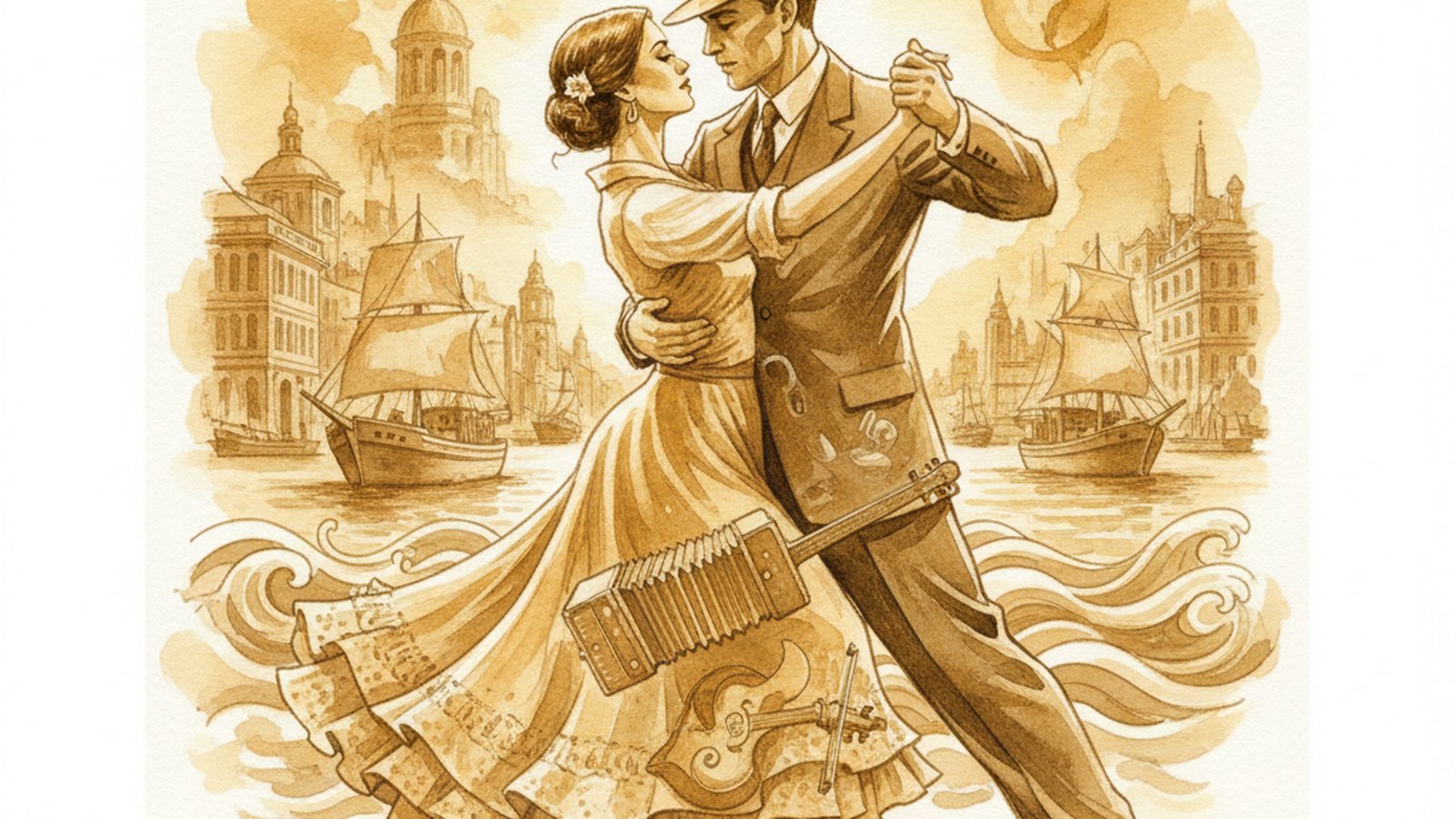
How Immigration Shaped Tango: The Buenos Aires Story
Tango was invented by strangers, for strangers, in a Buenos Aires where half the city was foreign-born. Here is how Italian, Spanish, German and African arrivals built the dance we do in London.
Carlos Gardel: The Voice That Made Tango Famous Worldwide
Explore the extraordinary life and legacy of Carlos Gardel, the Argentine singer whose voice carried tango from Buenos Aires to the world stage.

The Conventillo: How a Shared Patio Gave Birth to Tango
Tango did not begin in a ballroom. It began in the shared courtyard of a Buenos Aires tenement — and the habits that patio taught still explain how we dance in London halls tonight.