Tango and Tango: The Dance vs the Music Genre Explained
One Word, Many Meanings
Ask someone what tango is, and you will get very different answers depending on who you ask. A dancer in London might describe an intimate embrace and the feeling of moving as one with a partner. A musician in Buenos Aires might talk about the bandoneon, the orquesta tipica, and complex rhythmic structures. A casual listener might hum the melody of La Cumparsita or picture a rose between someone's teeth.
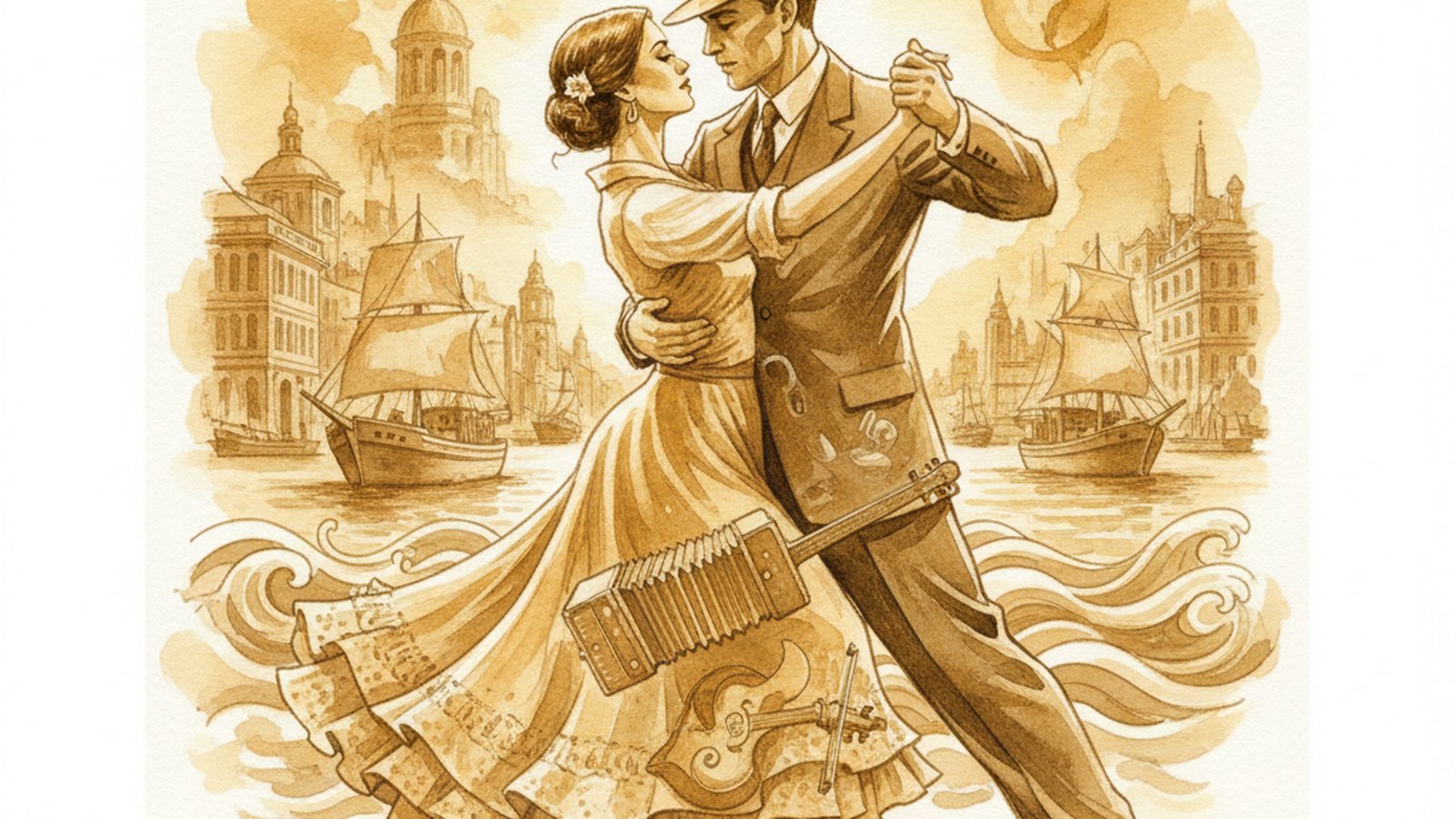
The word "tango" encompasses a remarkably rich cultural world -- one that includes a social dance, a musical genre, a form of poetry, and an entire cultural identity. Understanding the distinctions and connections between tango the dance and tango the music deepens your appreciation of both and makes you a more informed, sensitive dancer.
Tango as a Musical Genre
Tango music existed before tango was a formalised partner dance, and it has always had a life beyond the dance floor. As a musical genre, tango has its own history, structures, instruments, and artistic traditions that can be appreciated independently of dancing.
The Musical DNA of Tango
Tango music has several defining characteristics:
- The bandoneon -- this German-origin concertina became tango's signature instrument. Its melancholic, breathing quality gives tango music its distinctive emotional colour.
- The orquesta tipica -- the classic tango ensemble typically includes bandoneons, violins, piano, and double bass, sometimes with a vocalist
- Rhythmic patterns -- tango uses distinctive rhythmic figures, including the marcato (strong, even beats), sincopa (syncopated accents), and the characteristic 3-3-2 pattern
- Melodic expressiveness -- tango melodies tend toward the dramatic and melancholic, with wide intervals and passionate phrasing
- Poetic lyrics -- tango songs often tell stories of love, loss, nostalgia, and the streets of Buenos Aires, using lunfardo slang
Tango Music You Do Not Dance To
Much of the world's tango music was never intended for dancing. Concert tango, beginning most notably with Astor Piazzolla in the 1950s, is composed for listening. Piazzolla's complex time signatures, extended forms, and dynamic extremes make much of his work challenging or impossible to dance to socially -- yet it remains unmistakably tango in its emotional essence.
Other examples of non-dance tango music include:
- Tango songs performed by Carlos Gardel and other vocalists -- many of these are essentially art songs or popular ballads in tango style
- Tango poetry and spoken word -- recitations set to tango accompaniment
- Film and television tango scores -- composed for dramatic effect rather than dance
- Modern concert tango -- ensembles like the Kronos Quartet performing Piazzolla arrangements
Tango as a Social Dance
The tango that most readers of this blog practice is Argentine tango as a social partner dance. This is the tango of the milonga -- the improvised, intimate, connection-focused dance shared between two people in an embrace.
What Defines Tango as a Dance
- The embrace -- close or open, this physical connection between partners is the foundation of everything
- Improvisation -- unlike choreographed dances, social tango is created spontaneously in the moment
- Walking -- the fundamental movement of tango is a shared walk, made beautiful through quality and musicality
- Lead and follow -- a non-verbal conversation where one partner proposes movement and the other responds
- Floorcraft -- navigating a shared space with other couples, moving in the line of dance
- The codes -- cabeceo, tandas, cortinas, and the social etiquette that structures the milonga
Dance Tango Is Not Just Argentine Tango
It is worth noting that several distinct dance forms carry the name tango:
- Argentine tango -- the social dance from Buenos Aires, which is what we primarily practise in London
- Ballroom tango -- a standardised, codified version developed for competitive ballroom dancing, with staccato head movements and a rigid frame quite different from Argentine tango
- Finnish tango -- a unique tradition that developed in Finland from the 1910s, danced to Finnish tango music with its own distinctive melancholic style
- Uruguayan tango -- closely related to Argentine tango, with Montevideo claiming an equally important role in tango's origins
- Tango vals and milonga -- technically separate dances with their own musical forms, though they are danced at tango events and share much of the same vocabulary
Where Music and Dance Meet -- and Where They Diverge
The relationship between tango music and tango dance is intimate but not identical. Understanding where they converge and diverge is key to becoming a more thoughtful dancer.
Convergence: When Music Serves the Dance
The Golden Age orchestras of the 1930s through 1950s composed and arranged music specifically for dancers. Orchestras like Juan D'Arienzo ("the king of the beat") created music with clear, strong rhythms that practically pull you onto the dance floor. Carlos Di Sarli composed elegant, flowing music that invites a smooth, lyrical style of dancing. Osvaldo Pugliese created dramatic, complex arrangements that challenge and inspire advanced dancers.
This was music made for movement, and the interplay between musicians and dancers during the Golden Age was a genuine creative partnership. Musicians watched dancers; dancers responded to musicians. The art forms evolved together.
Divergence: When Music Stands Alone
From Piazzolla onward, much tango music has been created for the concert hall rather than the dance floor. This is not a failure or a betrayal -- it is a natural evolution. Just as jazz evolved from dance music to art music, tango music has developed artistic ambitions that sometimes transcend the requirements of social dancing.
The beauty of tango is that the dance and the music are siblings, not twins. They share the same family, the same emotional DNA, but they have each grown into independent art forms with their own identities and possibilities.
Why This Distinction Matters for Dancers
Understanding the difference between tango as music and tango as dance has practical implications:
- Musicality deepens -- when you understand tango music as its own art form, you listen more carefully and your dancing becomes more musically informed
- DJ appreciation grows -- you begin to understand the craft of selecting music that serves dancers, recognising that not all tango music works equally well on the social floor
- Cultural awareness expands -- you appreciate that tango is a complete cultural ecosystem, not just a set of steps performed to background music
- Conversation enriches -- you can engage more meaningfully with musicians, DJs, and fellow dancers about the art form you share
- Listening becomes a pleasure -- you develop the ability to enjoy tango music for its own sake, separate from dancing
Exploring Both Worlds in London
London offers exceptional opportunities to explore tango as both dance and music. Beyond classes and milongas, you can attend tango concerts, listen to bandoneon players at live events, and explore the extraordinary recorded catalogue of tango music spanning over a century.
Some ways to deepen your tango music appreciation:
- Attend live tango music events -- London regularly hosts visiting Argentine musicians
- Build a personal tango music collection and listen actively, away from the dance floor
- Learn about the major orchestras, their distinctive styles, and their key recordings
- Explore tango poetry and lyrics -- understanding the words adds layers of meaning
- Discuss music with your tango community -- DJs and experienced dancers are often passionate about sharing their knowledge
Deepen Your Tango Journey with TangoLife London
At TangoLife London, we believe that understanding tango's musical traditions makes you a better, more expressive dancer. Our classes explore musicality alongside technique, helping you connect more deeply with the music that moves you.
Visit TangoLife.london to find classes, musicality workshops, and milongas where you can experience both the dance and the music of tango at their finest.
Related Articles
How Immigration Shaped Tango: The Buenos Aires Story
Tango was invented by strangers, for strangers, in a Buenos Aires where half the city was foreign-born. Here is how Italian, Spanish, German and African arrivals built the dance we do in London.
The Role of Music in Tango Healing
Different tango orchestras affect us in different ways. Understanding why Di Sarli soothes and D'Arienzo excites can transform your dancing experience.
Lunfardo in Tango: The Slang Language Hidden in the Lyrics
Discover lunfardo, the Buenos Aires street slang hidden in tango lyrics. From vesre wordplay to Italian roots, the secret language of the music you dance to.