Tango Books for Dancers: Reading That Deepens Your Understanding
Beyond the Dance Floor
Tango is more than a physical practice. It is a culture, a history, a philosophy, and a way of understanding human connection. While the dance floor is where tango lives, reading about tango adds dimensions to your dancing that movement alone cannot. The best tango books give you context, vocabulary, and emotional depth that show up in your embrace and your musicality in ways you might not expect.
Here is a reading list for dancers who want to understand tango more deeply.
Essential Tango Reading
Tango: The Art History of Love by Robert Farris Thompson
This is perhaps the most important book on tango culture ever written. Thompson traces tango's roots through African and Argentine history, revealing the dance as a fusion of cultures that is far richer and more complex than most people realise. His writing is passionate and scholarly, illuminating connections between tango and broader artistic and social movements.
Why dancers should read it: Understanding tango's multicultural origins changes how you feel the dance. You carry its history in every step.
Twelve Minutes of Love: A Tango Story by Kapka Kassabova
Kassabova, a Bulgarian-born writer living in Edinburgh, describes her immersion in the tango world with beautiful, often lyrical prose. She captures the obsession, the vulnerability, and the strange intimacy of dancing with strangers. For anyone who has ever wondered why tango grips people so fiercely, this book provides eloquent answers.
Why dancers should read it: Kassabova articulates the emotional experience of tango in ways that validate and deepen your own feelings about the dance.
Tango and the Political Economy of Passion by Marta Savigliano
An academic work that examines tango through the lens of politics, gender, and colonialism. Savigliano explores how tango has been exported, commodified, and romanticised by different cultures. It is challenging reading but profoundly rewarding for dancers who want to think critically about the dance they love.
Why dancers should read it: It encourages you to think about the power dynamics inherent in tango — between partners, between cultures, between tradition and innovation.
Meaning in Tango by Veronica Toumanova
Written by a professional tango dancer and teacher, this book explores the philosophical and psychological dimensions of tango. Toumanova writes about connection, vulnerability, presence, and the transformative potential of the dance. Her perspective is that of a practitioner, not an academic, which makes her insights immediately relevant to social dancers.
Why dancers should read it: Toumanova gives language to experiences you have on the dance floor but may struggle to articulate. Her chapters on the embrace and on leading and following are particularly illuminating.
Books on Tango Music
Le Grand Tango: The Life and Music of Astor Piazzolla by Maria Susana Azzi and Simon Collier
Piazzolla revolutionised tango music, and his story is fascinating — from his childhood in New York to his controversial reinvention of the genre. This biography is essential for understanding the tensions between traditional and contemporary tango that continue to shape the dance world today.
Why dancers should read it: Understanding Piazzolla helps you understand the music debate in tango communities. Whether you love or resist nuevo tango, knowing its origins enriches your perspective.
Tango: A History of Obsession by Virginia Gift
Gift's book is partly a personal memoir and partly a guide to tango culture, with significant attention to the music. She writes about the orchestras, the DJs, and the relationship between music and dancing in a way that is accessible and engaging.
Why dancers should read it: The sections on orchestras and musical structure will enhance your musicality more than most workshops.
Memoirs and Personal Accounts
Tango Lessons by Meghan Flaherty
A beautifully written memoir about discovering tango in New York while navigating the complexities of young adulthood. Flaherty weaves her tango journey with her personal story, exploring themes of trust, vulnerability, and what it means to let someone lead — or to follow — both on and off the dance floor.
Why dancers should read it: Flaherty captures the raw, sometimes uncomfortable reality of learning tango with honesty that will resonate with anyone who has felt vulnerable in the embrace.
Happy as a Partridge: Learning to Dance the Argentine Tango by Christine Thomas-Sherwood
A lighthearted and warm account of discovering tango in London. Thomas-Sherwood writes with humour about the trials and joys of learning to dance later in life, and her descriptions of London milongas will be familiar to anyone on the local scene.
Why dancers should read it: Because sometimes you want a tango book that makes you smile and reminds you that the journey is supposed to be fun.
Poetry and Literature
Tango has deep connections to Argentine literature. While not specifically about dancing, these works illuminate the emotional landscape from which tango emerged:
- Selected Poems by Jorge Luis Borges — Borges wrote about tango directly in several poems, connecting the dance to Argentine identity and the barrios of Buenos Aires
- Tango lyrics collections — Reading the lyrics of classic tangos in translation reveals the poetry at the heart of the music. The themes of loss, longing, nostalgia, and joy that fill tango lyrics are the same emotions you express when you dance
When you read tango lyrics, you understand why certain melodies make your chest ache. The words and the music are inseparable.
How Reading Improves Your Dancing
This might seem like a stretch, but experienced dancers consistently report that reading about tango changes their dancing. Here is why:
- Context enriches expression. When you know the history and culture behind a Pugliese tanda, you dance it differently. Knowledge becomes feeling.
- Language shapes experience. Having words for your tango experiences — the quality of connection, the nature of musicality, the dynamics of the embrace — allows you to develop these elements more consciously.
- Perspective prevents staleness. Reading about tango from different angles — historical, personal, musical, philosophical — keeps your relationship with the dance fresh and multidimensional.
- Community conversation. Reading gives you something to talk about with other dancers beyond the usual discussions of steps and milongas. These deeper conversations build stronger community bonds.
Start Reading, Keep Dancing
You do not need to read all of these books. Start with whichever title intrigues you most and let it lead you to the next. Like tango itself, the reading journey is personal and there is no correct path.
For the living, breathing experience of tango in London — classes, milongas, and a community that shares your passion — visit TangoLife.london.
Related Articles
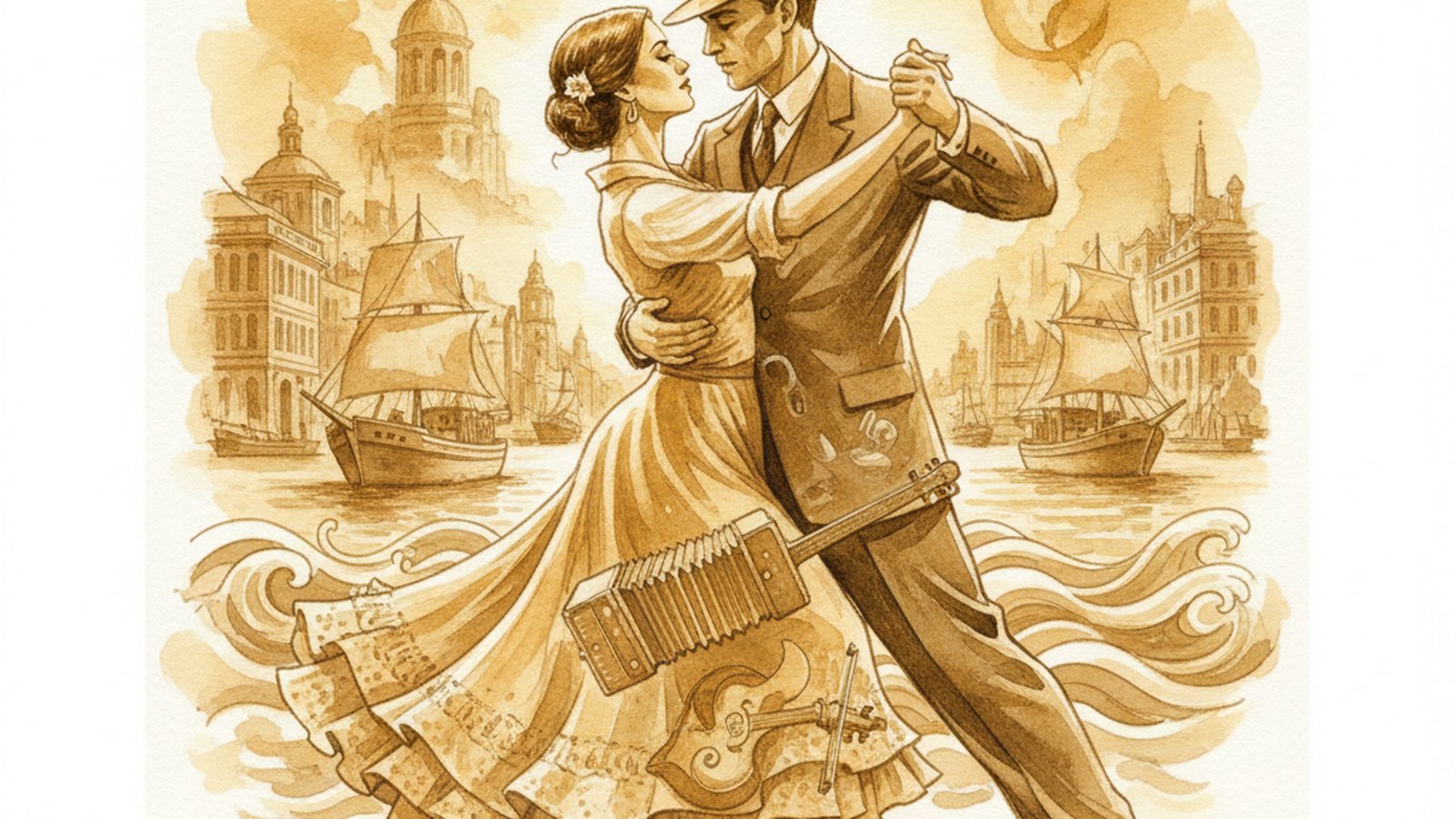
How Immigration Shaped Tango: The Buenos Aires Story
Tango was invented by strangers, for strangers, in a Buenos Aires where half the city was foreign-born. Here is how Italian, Spanish, German and African arrivals built the dance we do in London.
Tango Films Worth Watching: From The Tango Lesson to Our Last Tango
From The Tango Lesson to Our Last Tango, these essential tango films deepen your understanding of the dance and its rich cultural heritage.

Forever Tango and Tango Argentino: The Shows That Sparked a Boom
How two Broadway productions, Tango Argentino and Forever Tango, pulled tango back from decline and set off the global boom that eventually filled London's milongas.