The Golden Age of Tango: Why We Still Dance to 1940s Music
A Love Affair with the Past
Step into any milonga in London, Buenos Aires, Istanbul, or Tokyo, and you will hear the same thing: music recorded between roughly 1935 and 1955. Scratchy, warm, imperfect recordings made with analogue equipment in Buenos Aires studios more than eighty years ago. And the dance floor will be full.
For newcomers to tango, this is one of the most surprising discoveries. Why, in an age of infinite musical choice, do tango dancers around the world remain devoted to recordings from the 1940s? The answer reveals something profound about what makes tango unlike any other social dance.
What Was the Golden Age?
The Golden Age of Argentine tango, known in Spanish as the Epoca de Oro, refers to the period from the mid-1930s to the mid-1950s when tango music, dance, and culture reached their peak in Argentina. During these two extraordinary decades, tango was not a niche art form. It was the popular music of an entire nation.
Buenos Aires had hundreds of milongas operating every night of the week. Orchestras competed fiercely for dancers' loyalty, each developing a distinctive sound. The great bandleaders of the era, including Juan D'Arienzo, Carlos Di Sarli, Anibal Troilo, Osvaldo Pugliese, Francisco Canaro, and Rodolfo Biagi, were household names, as famous in Argentina as rock stars would later become elsewhere.
The Numbers Tell a Story
At the peak of the Golden Age, Buenos Aires had an estimated 600 milongas. Orchestras performed live for dancers multiple nights per week. Tens of thousands of porteños danced tango as a regular social activity. The music and the dance evolved together in a symbiotic relationship that produced something extraordinary.
Why This Music Works for Dancing
The enduring dominance of Golden Age recordings is not mere nostalgia. There are concrete musical reasons why this repertoire remains unsurpassed for social dancing.
The Music Was Made for Dancers
This is the single most important point. Golden Age orchestras played in milongas, for dancers. The musicians watched the dancers, and the dancers responded to the musicians. This feedback loop, sustained over years, produced music that is exquisitely calibrated for partner dancing.
The tempo is consistent enough to maintain the flow of movement but varied enough to inspire musical interpretation. The phrasing creates natural pauses and surges that dancers can feel and express. The emotional range, from playful to melancholy, from tender to dramatic, gives dancers an infinite palette to work with.
Rhythmic Clarity
Golden Age recordings typically feature a clear, strong beat that dancers can follow confidently. This does not mean the music is simple. Far from it. But even in the most complex arrangements, the pulse remains accessible. D'Arienzo's driving beat, Di Sarli's stately rhythm, Troilo's subtle swing: each offers a different but always danceable foundation.
Emotional Depth
Great tango music tells a story in three or four minutes. The combination of melody, rhythm, orchestration, and often a singer's voice creates an emotional journey that two dancers can share. This emotional content is what transforms a dance from mere movement into a genuine conversation between two people and the music.
Variety Within a Tradition
Despite sharing a common foundation, Golden Age orchestras were remarkably diverse. A tanda of D'Arienzo feels completely different from a tanda of Pugliese. This variety means that a DJ can programme four hours of music from a twenty-year period and take dancers through an astonishing range of moods and energies.
The Great Orchestras and Their Characters
Understanding why we dance to Golden Age music becomes easier when you know the personalities involved.
- Juan D'Arienzo is called the King of the Beat. His music is rhythmic, energetic, and irresistibly danceable. When D'Arienzo plays, the floor fills instantly.
- Carlos Di Sarli is known as El Senor del Tango. His elegant, sweeping arrangements invite long, flowing movements and deep connection.
- Anibal Troilo, affectionately called Pichuco, balanced rhythmic drive with emotional depth. His music rewards sensitive, musical dancers.
- Osvaldo Pugliese brought dramatic intensity to tango. His music is challenging and deeply rewarding, full of pauses, surges, and theatrical dynamics.
- Francisco Canaro offered warm, accessible music perfect for social dancing at every level.
- Rodolfo Biagi brought a distinctive staccato piano style that makes dancers smile with its playful, sparkling energy.
What Happened After the Golden Age?
In 1955, a military coup overthrew the government of Juan Peron, and the new regime actively suppressed tango culture. Large gatherings were restricted, milongas were shut down, and tango went underground. The great orchestras lost their venues and their audiences. Many disbanded.
Tango survived in small, private gatherings and in the memories of the generation who had lived through the Golden Age. When tango began its international revival in the 1980s and 1990s, it was the music of the Golden Age that people rediscovered and fell in love with all over again.
But What About New Tango Music?
This is a fair and important question. There is excellent contemporary tango music being composed and recorded today. Artists like the Sexteto Milonguero, Solo Tango Orquesta, and many others are creating new music specifically for social dancing.
Neo-tango and electronic tango, including artists like Gotan Project and Otros Aires, have also found a place in some milongas, particularly in alternative or neolonga events.
However, most traditional milongas worldwide continue to programme primarily Golden Age music, supplemented by carefully chosen contemporary recordings. This is not closed-mindedness. It reflects the extraordinary quality and danceability of the original repertoire. New tango music is measured, fairly or not, against a very high standard.
How to Start Listening
If you are new to tango and want to develop your ear for Golden Age music, here are some practical suggestions:
- Start with D'Arienzo. His rhythmic clarity makes the beat easy to find, and his energy is infectious. Try La Cumparsita, Pensalo Bien, or El Flete.
- Move to Di Sarli. Listen for the elegance and the sweeping melodic lines. Try recordings with singer Roberto Rufino or Jorge Duran.
- Explore Troilo. Notice how he balances rhythm and emotion. His recordings with singer Francisco Fiorentino are a wonderful starting point.
- Listen while you walk. Put Golden Age tango on your headphones during your commute. Feel the beat in your steps. This is one of the most effective ways to internalise the music.
- Attend milongas and listen. Even if you do not dance every tanda, sit and listen. Watch how experienced dancers respond to different orchestras. You will learn enormously.
The Music Lives Because We Dance to It
There is something beautiful about the fact that recordings made in Buenos Aires in the 1940s continue to bring people together on dance floors around the world in 2026. The musicians who created this music could never have imagined that their work would still be cherished decades later, on the other side of the world, by people who have never set foot in Argentina.
But that is the magic of Golden Age tango. The music was made with such care, such understanding of the human need for connection and expression, that it transcends time and place. Every time we step onto the dance floor and hear the first notes of a tanda, we join a conversation that has been going on for nearly a century.
Golden Age tango is not old music. It is timeless music. And as long as people want to hold each other and move together, it will remain so.
Want to hear these orchestras and experience the magic of dancing to Golden Age tango? Visit TangoLife.london to find milongas, classes, and events where this extraordinary music comes alive every week in London.
Related Articles
Juan D'Arienzo: Why the King of the Beat Fills Every Floor
Discover why Juan D'Arienzo, the King of the Beat, fills every tango dance floor. Explore his music, essential recordings, and how to dance to his rhythm.
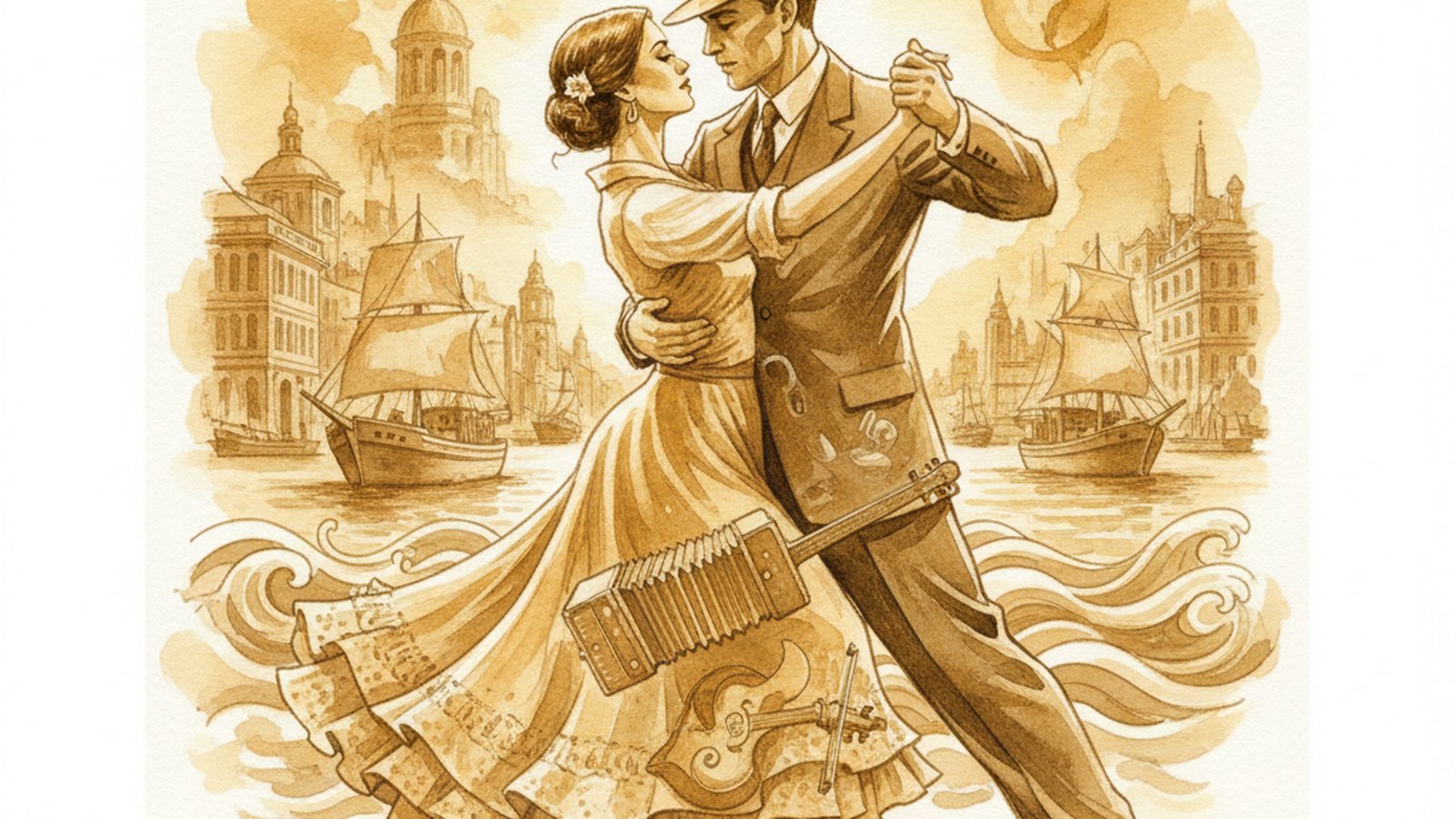
How Immigration Shaped Tango: The Buenos Aires Story
Tango was invented by strangers, for strangers, in a Buenos Aires where half the city was foreign-born. Here is how Italian, Spanish, German and African arrivals built the dance we do in London.
Lunfardo in Tango: The Slang Language Hidden in the Lyrics
Discover lunfardo, the Buenos Aires street slang hidden in tango lyrics. From vesre wordplay to Italian roots, the secret language of the music you dance to.