The Milonguero Style: Close Embrace on a Crowded Floor
The Heart of Social Tango
If you have ever watched experienced dancers navigate a packed Buenos Aires milonga, moving with quiet confidence through impossibly tight spaces while maintaining an intimate connection with their partner, you have seen milonguero style in action. This is tango at its most essential -- stripped of flourishes, focused on feeling, and perfectly adapted to the reality of a crowded dance floor.
For London dancers accustomed to spacious studios and open-embrace classes, the milonguero style can feel like a revelation. It asks you to forget about impressive figures and instead discover the extraordinary depth hidden in simplicity.
What Defines Milonguero Style?
Milonguero style -- sometimes called estilo milonguero, apilado, or confiteria style -- is characterised by several distinctive features:
The Close Embrace
This is not simply dancing close together. In milonguero style, the embrace is the dance. Partners lean gently into each other, chest to chest, creating a shared axis. The connection point is typically at the upper chest or sternum area, and the embrace remains closed throughout the dance -- there is no opening and closing as in salon style.
The leader's right arm wraps firmly around the follower's back, while the follower's left arm drapes over the leader's shoulder or around the back of the neck. The free hands may hold each other, but the primary connection is through the torso.
"In milonguero style, you do not lead with your arms or your hands. You lead with your heart." -- A common saying among Buenos Aires milongueros
The Slight Lean (Apilado)
The term "apilado" means "stacked" or "piled up," and it refers to the gentle forward lean that both partners maintain. Each person's weight is slightly forward, creating a V-shape from the ground up. The partners support each other -- if one were to step away suddenly, the other would fall forward slightly.
This lean is subtle. It is not about collapsing onto your partner but about sharing weight and creating a mutual support system. Think of it as two playing cards leaning against each other. Neither can stand alone, but together they form a stable structure.
Compact Movement
Milonguero style uses a smaller vocabulary of steps compared to salon or nuevo tango, but this is a feature, not a limitation. The movements are compact, grounded, and musical. Common elements include:
- The walk -- the foundation of everything, refined to its purest expression
- Ochos in place -- small, tight ochos that barely move through space
- Giros -- turns executed in a very small radius
- Rhythmic play -- quick-quick-slow patterns, syncopations, and pauses
- Weight changes -- subtle shifts that create musical expression without travelling
Why Milonguero Style Evolved
Understanding why milonguero style developed the way it did helps us appreciate its genius. In the golden age milongas of 1940s and 1950s Buenos Aires, dance floors were packed. Hundreds of couples would fill venues like Club Sin Rumbo, Salon Canning, or Lo de Celia. There was simply no room for dramatic boleos, wide-sweeping ganchos, or expansive walking patterns.
The dancers who thrived in these conditions were those who could express everything the music offered within the space of a single floor tile. They developed a style that was intimate, musical, and supremely practical. The milongueros -- the men who lived for tango, who went dancing every night of the week -- perfected this art over decades.
A Style Born of Necessity and Refined by Passion
What began as a practical adaptation became something far more profound. By limiting the physical vocabulary, milonguero style forced dancers to develop extraordinary sensitivity to music, to their partner's breathing, to the smallest weight shifts and impulses. It became a meditation in movement, a conversation conducted in whispers rather than shouts.
Learning Milonguero Style in London
If you are interested in exploring milonguero style, London offers several pathways. But be prepared: this style challenges some assumptions that many tango students develop early in their learning.
Embracing the Embrace
The first challenge is physical and emotional. Dancing in close embrace requires trust, comfort with physical proximity, and the willingness to be truly present with another person. For many London dancers who began with open embrace, the transition can feel vulnerable.
Start by practising the embrace with a trusted partner. Stand together, find your shared axis, and simply breathe. Feel how your partner's ribcage expands and contracts. Notice how a slight shift in weight creates a clear communication. This is the foundation of everything that follows.
Simplifying Your Dance
If you have been studying tango for a while, you may have accumulated a large collection of steps and figures. Milonguero style asks you to set most of them aside -- not permanently, but long enough to rediscover the basics.
Try dancing an entire tanda using only the walk, weight changes, and pauses. You will likely discover that with the right music and the right connection, this is not boring at all. It can be the most musical, expressive dancing you have ever done.
Developing Your Musicality
Without big movements to fill the time, your relationship with the music becomes paramount. Milonguero style dancers are some of the most musical dancers in the tango world. They mark every subtle accent, every pause, every crescendo -- but they do it with their bodies rather than their feet.
Listen to the orchestras that milongueros particularly favour: Di Sarli for his elegant simplicity, Tanturi for his rhythmic drive, Calo for his energy, and D'Arienzo for his infectious beat. Let these orchestras teach you about musical expression within a compact frame.
Common Misconceptions
Several misunderstandings circulate about milonguero style. Let us address them:
- "It is only for old people" -- Milonguero style is ageless. Young dancers in Buenos Aires and around the world are embracing it with passion
- "It is too simple" -- The apparent simplicity is deceptive. The subtlety and musicality required are extraordinarily demanding
- "You cannot dance it to all music" -- While it particularly suits golden age music, skilled milonguero-style dancers can adapt to a wide range of orchestras
- "It is uncomfortable" -- When done well, the close embrace is one of the most comfortable ways to dance. Discomfort usually indicates technical issues that can be resolved
- "It is the only authentic tango" -- While deeply traditional, milonguero style is one of several legitimate tango styles. Buenos Aires itself has always been home to multiple approaches
Milonguero Style and Floorcraft
One of the greatest gifts milonguero style offers the London tango community is excellent floorcraft. When you dance compact, you contribute to the flow of the ronda. You do not kick your neighbours. You do not block the line of dance with extended boleos or dramatic pauses in the middle of the floor.
At busy London milongas, milonguero-style dancers are often the most welcome partners precisely because they dance with awareness of the space around them. Their compact style allows more couples to enjoy the floor, and their attention to the ronda keeps everyone moving safely.
The Emotional Depth of Simplicity
Perhaps the most compelling reason to explore milonguero style is its emotional depth. When you strip away the choreographic complexity, what remains is pure connection -- between you and your partner, between you and the music, between you and the other couples sharing the floor.
Many experienced dancers report that their most memorable tandas were danced in milonguero style: three minutes of quiet, profound connection that no amount of spectacular footwork could match.
Find Your Close Embrace in London
Whether milonguero style becomes your primary way of dancing or simply adds a new dimension to your tango, exploring it will deepen your understanding of what tango can be. It teaches patience, sensitivity, and the art of saying more with less.
At TangoLife.london, we celebrate all styles of tango and encourage dancers to explore the full richness of this tradition. Visit TangoLife.london to find classes and milongas where you can experience the beauty of close embrace dancing in London.
Related Articles

How YouTube Changed Tango Learning and Made Us Visual Dancers
YouTube handed London dancers the whole tango archive for free — and quietly taught a generation to learn with their eyes. Here's what it gave us, what it can't teach, and how to watch better.
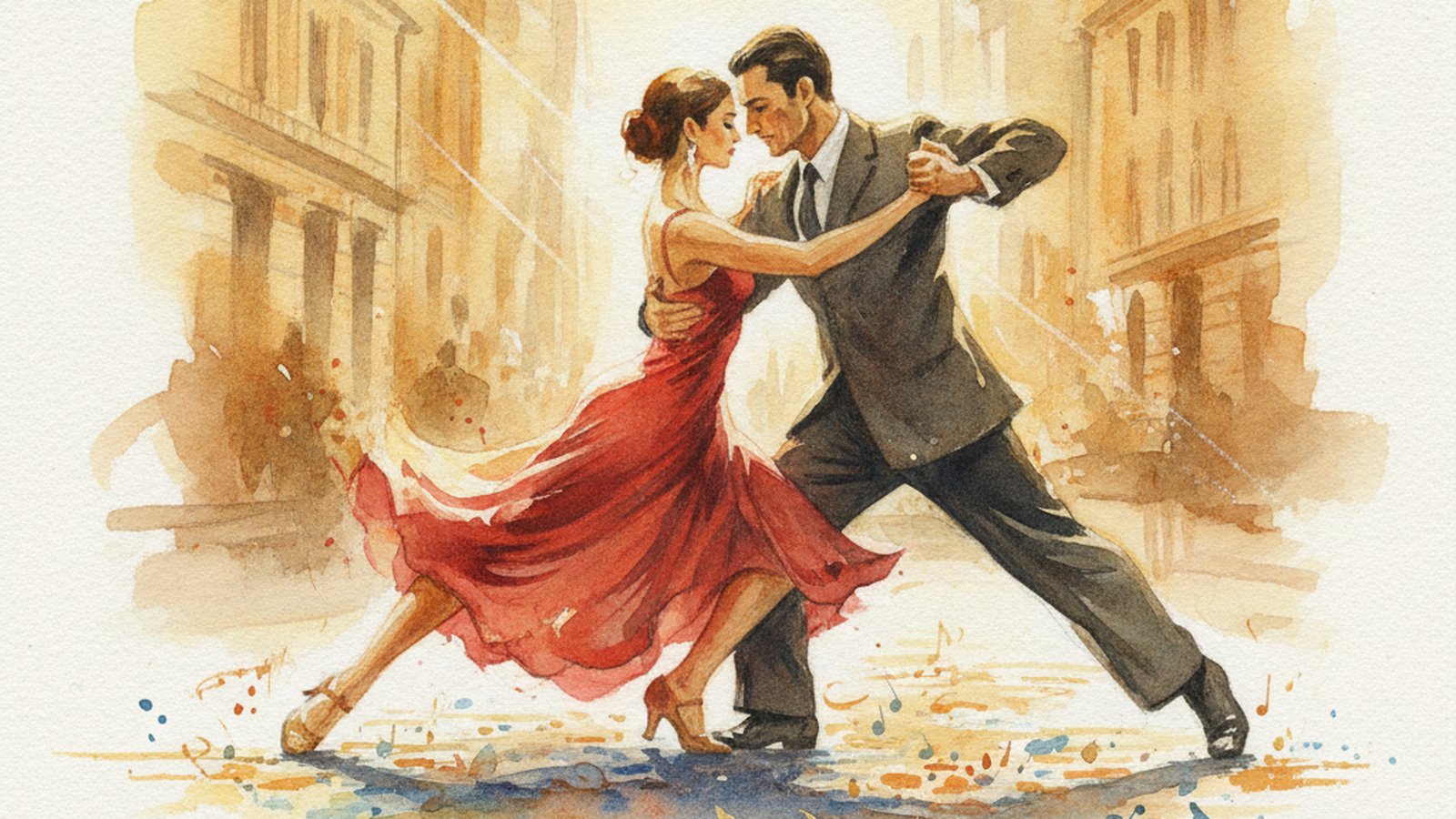
Caminata Musicale: Turn Your Tango Walk Into Music
The caminata is tango's foundation — but with timing, dynamics and phrasing, a simple walk becomes a musical conversation. Here's how to build yours.
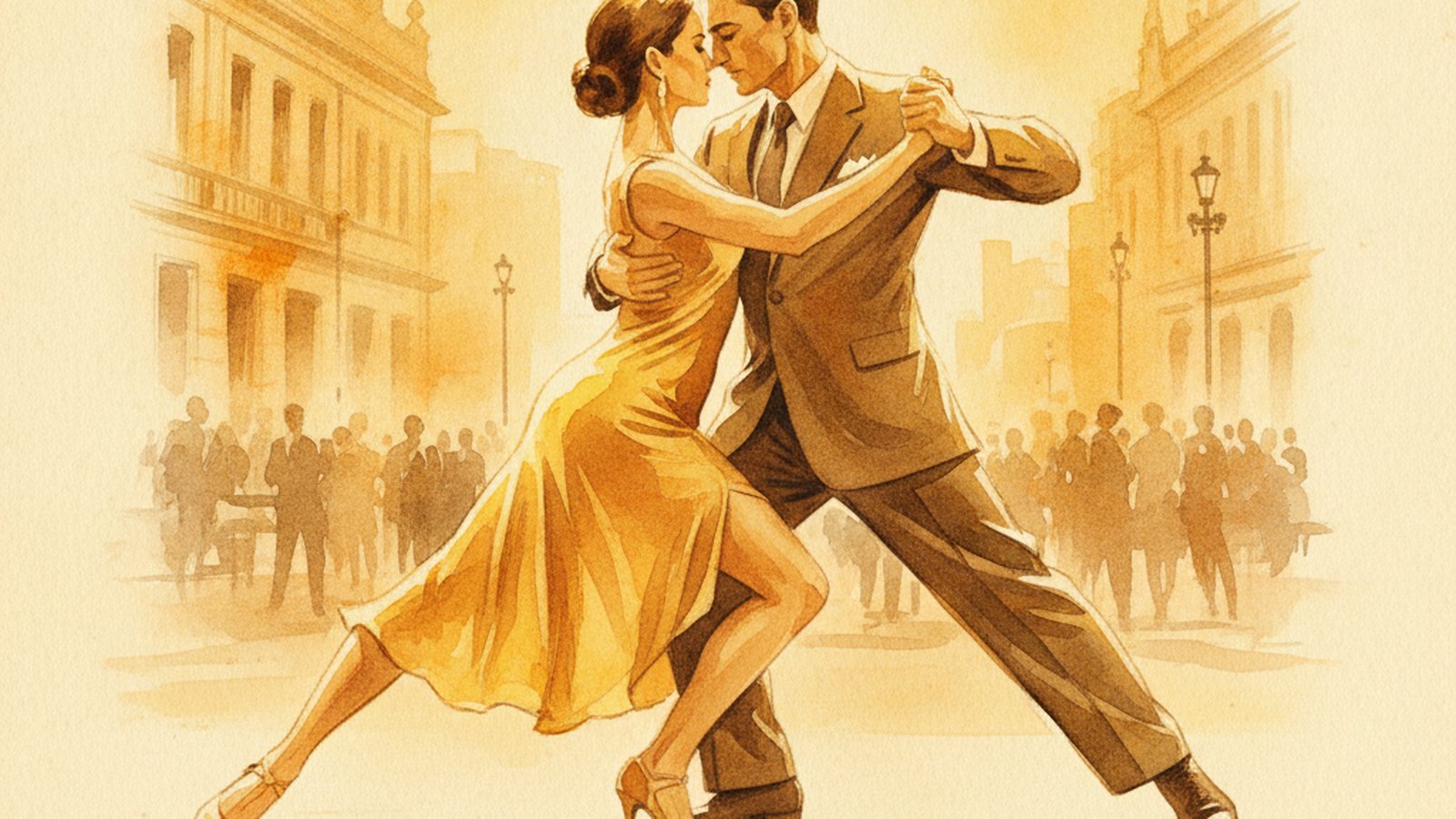
The Side Step: Creating Space and Rhythm in Tango
The side step is tango's quiet powerhouse — the move that makes space on a crowded floor and turns simple weight changes into rhythm. Here's how to master it.