Understanding Compás: The Rhythmic Foundation Every Dancer Needs
What Is Compás and Why Does It Matter?
If you've spent any time in the London tango scene, you've probably heard teachers say "find the compás" or "stay in compás." But what exactly does this mean, and why is it considered the single most important musical skill a tango dancer can develop?
Compás simply means the underlying beat or pulse of the music — the steady rhythmic foundation that holds everything together. In tango, it's typically a 4/4 or 2/4 time signature, giving us a regular, walking-pace pulse that organises all the melody, harmony, and ornamentation above it.
Think of compás as the heartbeat of the music. You can play with it, stretch it, double it, or pause within it — but you must first be able to hear it and feel it in your body before any of those more sophisticated musical choices become possible.
Hearing the Beat: Where to Listen
For dancers coming from other musical backgrounds, tango's compás can initially be elusive. Unlike pop music with its obvious drum patterns, tango often buries the beat within the texture of the orchestra. Here's where to listen:
The Piano
In most tango orchestras, the piano provides the rhythmic backbone. Listen for the regular, marcato (marked) pattern in the left hand of the piano — it's often playing on every beat, giving you a steady reference point. In orchestras like D'Arienzo's, the piano is so prominent that the beat is impossible to miss.
The Bandoneón
The bandoneón section often reinforces the compás, particularly in more rhythmic tangos. When you hear the bandoneóns playing staccato chords together, they're usually marking the beat with emphatic precision.
The Double Bass
The contrabajo (double bass) is your secret weapon for finding the compás. It typically plays on beats one and three (in 4/4 time), providing a deep, resonant anchor. Train your ear to follow the bass, and you'll always know where the beat is, even when the melody wanders freely above it.
The Different Ways to Walk in Compás
Once you can hear the beat, you have several fundamental choices about how to relate your walking to it. These choices are the building blocks of musical tango dancing.
Caminar al Compás (Walking on the Beat)
The most fundamental relationship: one step per beat. This is where every dancer should start. Walking steadily on each beat of the music creates a grounded, confident quality that communicates clarity to your partner. In a typical tango at moderate tempo, this means roughly one step per second.
Don't underestimate the power of a simple, well-timed walk. Many of the best dancers in Buenos Aires milongas spend the majority of their dances simply walking — but walking with such precise musical timing and physical quality that it becomes transcendent.
Medio Tiempo (Half-Time)
Walking on every other beat — stepping on beats one and three, for example, and simply transferring weight or pausing on two and four. This creates a slow, deliberate, expansive quality that works beautifully during lyrical passages or when you want to breathe space into the dance.
Half-time is particularly effective during:
- The introduction of a song, before the full orchestra enters
- Soft, melodic passages where the singer carries the line
- Moments of emotional intensity where stillness speaks louder than movement
Doble Tiempo (Double-Time)
Stepping twice per beat — effectively doubling your walking speed while the music's tempo stays the same. This creates excitement, energy, and playfulness. It's the foundation of traspié (quick-quick-slow patterns) and is essential for dancing milonga.
Double-time requires good technique and clear leading because you're asking your partner to move faster. Use it in short bursts for maximum impact — a few beats of double-time followed by a return to normal time creates a wonderful contrast.
Common Mistakes and How to Fix Them
Dancing to the Melody Instead of the Beat
This is the most common issue for developing dancers. The melody is seductive — it soars and dips and pauses, and it's natural to want to follow it with your feet. But the melody is free precisely because the compás holds steady underneath. If you follow the melody with your steps, you'll lose the rhythmic connection that makes tango feel like tango.
The fix: Practise walking to the beat while listening to the melody. Your body stays in compás; your emotional expression responds to the melody through embrace quality, dynamics, and pauses — not through irregular stepping.
Rushing the Beat
Anxiety, excitement, or habit can cause dancers to consistently step slightly ahead of the beat. This creates a rushed, breathless quality that prevents your partner from settling into the music.
The fix: Practise walking alone to tango music, focusing on landing your step precisely on the beat, not before it. Recording yourself and playing it back can be revelatory.
Ignoring the Beat Entirely
Some dancers become so focused on executing patterns that the music becomes mere background noise. The steps happen in their own time, disconnected from what the orchestra is doing.
The fix: Simplify. Walk. Just walk in compás. Remove all figures and patterns until your walk is reliably musical. Then gradually add complexity, always checking that your timing remains anchored to the beat.
Practical Exercises for London Dancers
Here are exercises you can do at home, at a práctica, or even on your commute:
- Tap along: Play tango music and tap your foot or clap on every beat. Start with rhythmic orchestras (D'Arienzo, Biagi) where the beat is obvious, then progress to more lyrical ones (Di Sarli, Pugliese) where it's subtler.
- Walk at home: Clear some space and practise walking to music — one step per beat. Focus on arriving precisely on the beat, not before or after.
- Count aloud: While listening, count "one, two, three, four" repeatedly. This develops your internal metronome.
- Switch between speeds: Practise alternating between walking in time, half-time, and double-time within a single song. This builds flexibility and musical awareness.
- Listen on your commute: Put on a tango playlist during your Tube journey and mentally walk to the music. Your brain practises timing even when your feet are still.
Compás Is Freedom, Not Restriction
Beginning dancers sometimes feel that staying in compás is limiting — that it prevents creative expression. The opposite is true. Compás is the foundation that makes all musical expression possible. Once you can reliably walk in time, you can choose when to double the time, when to pause, when to stretch a step, when to play with syncopation. Without compás, those choices don't exist — you're just randomly timing your steps.
The greatest dancers in Buenos Aires all share one quality: impeccable compás. Everything else — the elegance, the creativity, the emotional depth — is built on that rhythmic foundation.
Develop your sense of compás at classes, prácticas, and milongas across London. Find what's on this week at TangoLife.london.
Related Articles
Musicality for Beginners: Hearing the Beat Before the Melody
Musicality starts with hearing the beat. Learn practical exercises to develop your rhythmic foundation and dance tango with musical intention.

Tango Vals: How to Dance with Swing and Flow, Not Counting
Vals isn't one-two-three. Learn to step on beat one, add swing with optional steps, and find the continuous, circular flow that makes tango vals feel like flying.
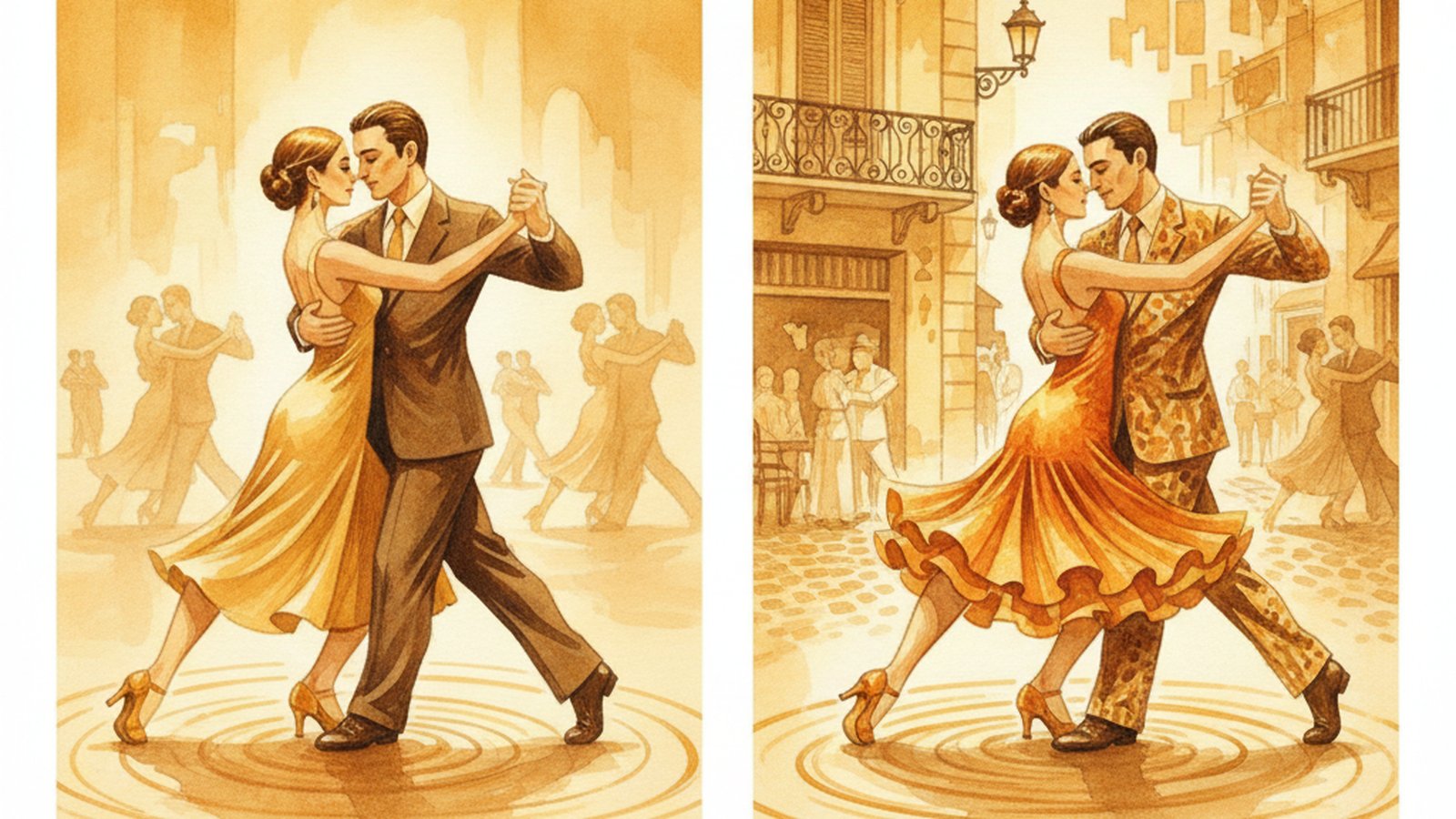
Milonga Lisa vs Con Traspié: Two Ways to Dance One Rhythm
Milonga lisa keeps it smooth; con traspié adds the cheeky syncopation. Here's how to hear, dance, and choose between both on a London floor.