Caminata Musicale: Turning a Simple Walk Into Musical Art
When Walking Becomes Dancing
There's a moment in every tango dancer's journey when they realise something profound: the walk is not preparation for the dance — the walk is the dance. The caminata, or tango walk, is the single most important movement in Argentine tango, and when it's done musically, it can be more beautiful and more moving than any elaborate figure.
The concept of caminata musicale — the musical walk — is about transforming each step from a mechanical action into a musical statement. It's the difference between reciting words and reading poetry aloud.
What Makes a Walk "Musical"?
A mechanical walk hits the beat like a metronome — step, step, step, step, evenly spaced, evenly weighted. It's correct but lifeless. A musical walk responds to everything the music is doing: the rhythm, the melody, the dynamics, the phrasing, the silence.
Consider this: if you were walking to Beethoven's Fifth Symphony, you wouldn't walk the same way during the famous four-note opening as during the flowing second movement. The music would change your walk — its speed, its weight, its energy. Tango works exactly the same way, except the conversation between your feet and the music is even more intimate.
The Elements of Musical Walking
1. Timing: When You Step
The most basic level of musical walking is when you place your foot. Most beginners step on every strong beat — and that's a perfectly good starting point. But musical walking offers many more options:
- On the beat (a tiempo): Stepping on the strong beat of the music. Steady, grounded, reliable
- Double time (doble tiempo): Stepping on every beat, including the weak beats. Creates energy and forward momentum
- Half time: Stepping on every other strong beat. Creates slowness, weight, and drama
- Syncopation: Stepping between beats, creating surprise and playfulness
- With the melody: Ignoring the rhythmic beat entirely and stepping with the melodic line — longer notes get slower steps, quick melodic runs get quicker feet
The best dancers mix these freely within a single song, shifting between timing strategies as the music evolves.
2. Quality: How You Step
Beyond timing, the quality of each step can reflect the music. Think about these contrasts:
- Staccato steps: Quick, crisp, precise — matching sharp, rhythmic passages (think D'Arienzo)
- Legato steps: Smooth, connected, flowing — matching sustained, lyrical phrases (think Di Sarli)
- Heavy steps: Grounded, weighted, deliberate — matching dramatic, intense moments (think Pugliese)
- Light steps: Barely touching the floor, almost floating — matching delicate, pianissimo passages
- Suspended steps: Steps that begin but don't complete immediately, hovering mid-transfer — matching musical suspensions
3. Size: How Far You Step
The length of your step is another musical variable. A long, reaching step covers more ground and creates a feeling of expansion — perfect for a sweeping violin phrase. A small, close step creates intimacy and control — ideal for a quiet piano passage or a rhythmic marcato section.
Musical walkers vary their step size constantly, painting the music with their feet.
4. Pauses: When You Don't Step
Perhaps the most powerful musical tool in the caminata is the pause. Standing still while the music plays — absorbing it, feeling it, letting it pass through you — creates dramatic tension that makes the next step feel significant.
A teacher once told me: "The silence between the notes is where the music lives. The pause between your steps is where the tango lives." I've never forgotten it.
Pauses are most effective when they align with the music — a held chord, a breath between phrases, a dramatic silence before the climax. But they can also be used against the music for contrast, creating tension between what the ears expect and what the body does.
Orchestra-Specific Walking
Each tango orchestra has a distinct personality, and a truly musical walk responds to that personality:
Walking to D'Arienzo
D'Arienzo is the "King of the Beat." His music is rhythmic, driving, and energetic. A musical walk to D'Arienzo tends to be crisp, precise, and clearly articulated. The beat is strong and insistent — your feet want to match that clarity. Quick changes of timing, double-time passages, and sharp collections suit his music beautifully.
Walking to Di Sarli
Di Sarli's music is elegant, smooth, and deeply romantic. The walk here is longer, more flowing, with weight and gravitas. Step into the floor rather than onto it. Let each step breathe. Di Sarli's music rewards slow weight transfers and moments of suspension.
Walking to Pugliese
Pugliese demands drama. His music builds tension, creates suspense, and releases energy in powerful surges. Walking to Pugliese means embracing extremes: very slow, weighted steps during the tense passages, then sudden acceleration during the yumba (rhythmic drive). Pauses are essential — Pugliese practically demands that you stop and feel the music before continuing.
Walking to Troilo
Troilo balances rhythm and melody beautifully. Walking to Troilo might follow the bandoneon line in one phrase and switch to the rhythmic base in the next. His music invites variety and sensitivity — it's perhaps the most conversational of the great orchestras.
Exercises to Develop Your Musical Walk
The One-Song Focus
Choose one tango song. Walk to it every day for a week. Each day, focus on a different aspect:
- Day 1: Walk on the strong beat only
- Day 2: Walk to the melody, ignoring the beat
- Day 3: Vary your step size — big for loud, small for soft
- Day 4: Add pauses wherever the music suggests them
- Day 5: Vary the quality — staccato for rhythmic sections, legato for lyrical ones
- Day 6: Combine everything you've explored
- Day 7: Just dance. Let your body choose
The Contrast Exercise
Play two contrasting orchestras back to back — D'Arienzo then Pugliese, for example. Walk to each and notice how dramatically your walk changes. If it doesn't change, that's valuable information about where your musicality needs development.
The Leader-Follower Musical Walk
With a partner, walk in embrace for an entire song with no figures — just walking. The leader's job is to express the music through the walk. The follower's job is to receive and amplify that expression. Afterwards, discuss what you each felt. This exercise builds musical communication between partners.
Why the Musical Walk Matters at Milongas
On a crowded London milonga floor, elaborate figures are often impossible. But a musical walk is always available, regardless of how packed the floor is. The dancers who are most sought-after as partners are often not the ones with the biggest vocabulary of moves — they're the ones whose walk makes you feel the music in your body.
A three-minute tanda danced entirely as a musical walk, in close embrace, responding to every nuance of a beautiful Di Sarli track — that can be one of the most satisfying experiences tango has to offer. No ganchos required.
Develop your musical walk at classes and milongas across London. Find your next opportunity to walk beautifully at TangoLife.london.
Related Articles
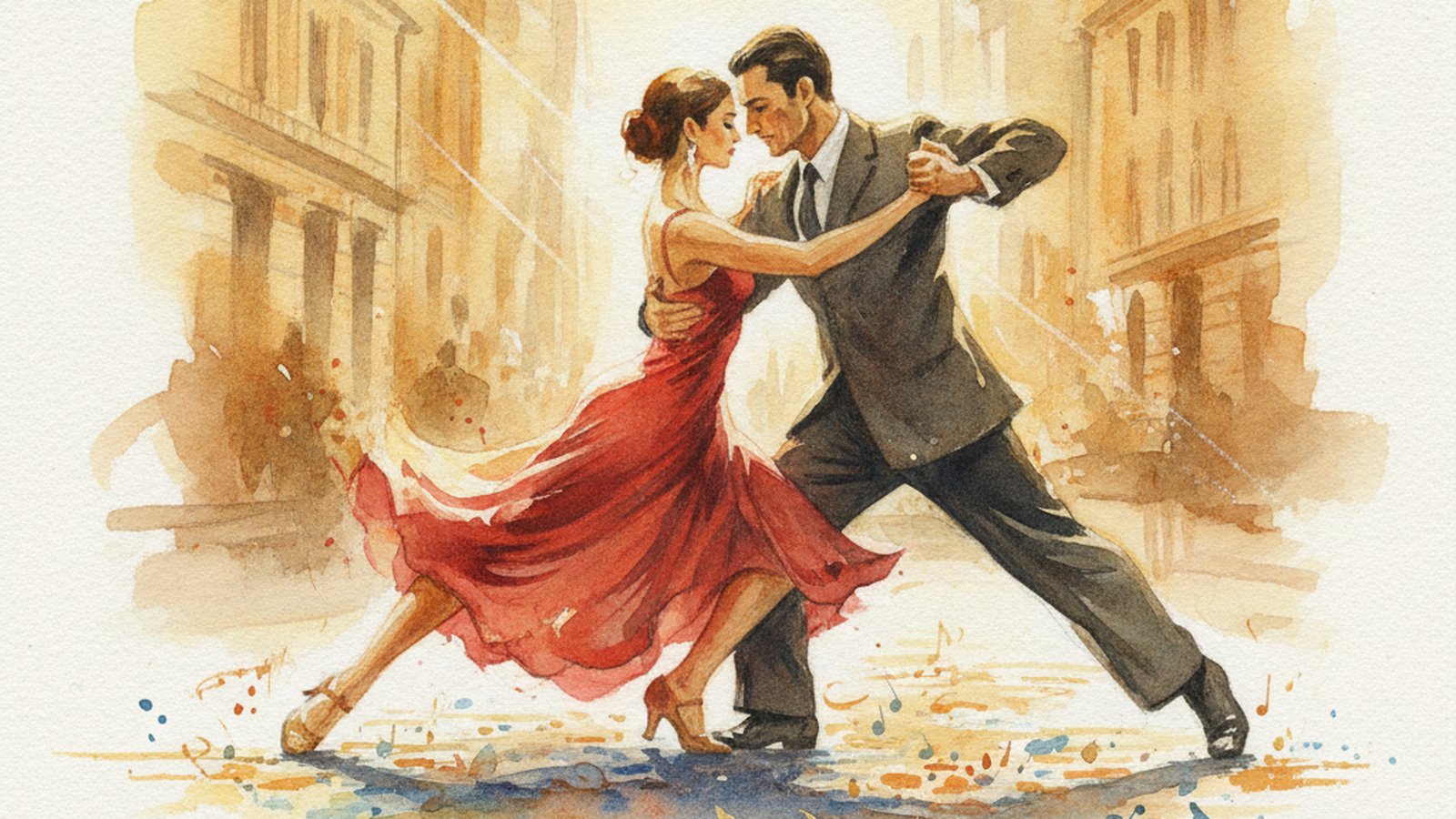
Caminata Musicale: Turn Your Tango Walk Into Music
The caminata is tango's foundation — but with timing, dynamics and phrasing, a simple walk becomes a musical conversation. Here's how to build yours.

Tango Vals: How to Dance with Swing and Flow, Not Counting
Vals isn't one-two-three. Learn to step on beat one, add swing with optional steps, and find the continuous, circular flow that makes tango vals feel like flying.
Milonga Lisa vs Con Traspié: Two Ways to Dance One Rhythm
Milonga lisa keeps it smooth; con traspié adds the cheeky syncopation. Here's how to hear, dance, and choose between both on a London floor.