DJing in Buenos Aires: the ultimate tango DJ experience
Why Buenos Aires is the DJ's true classroom
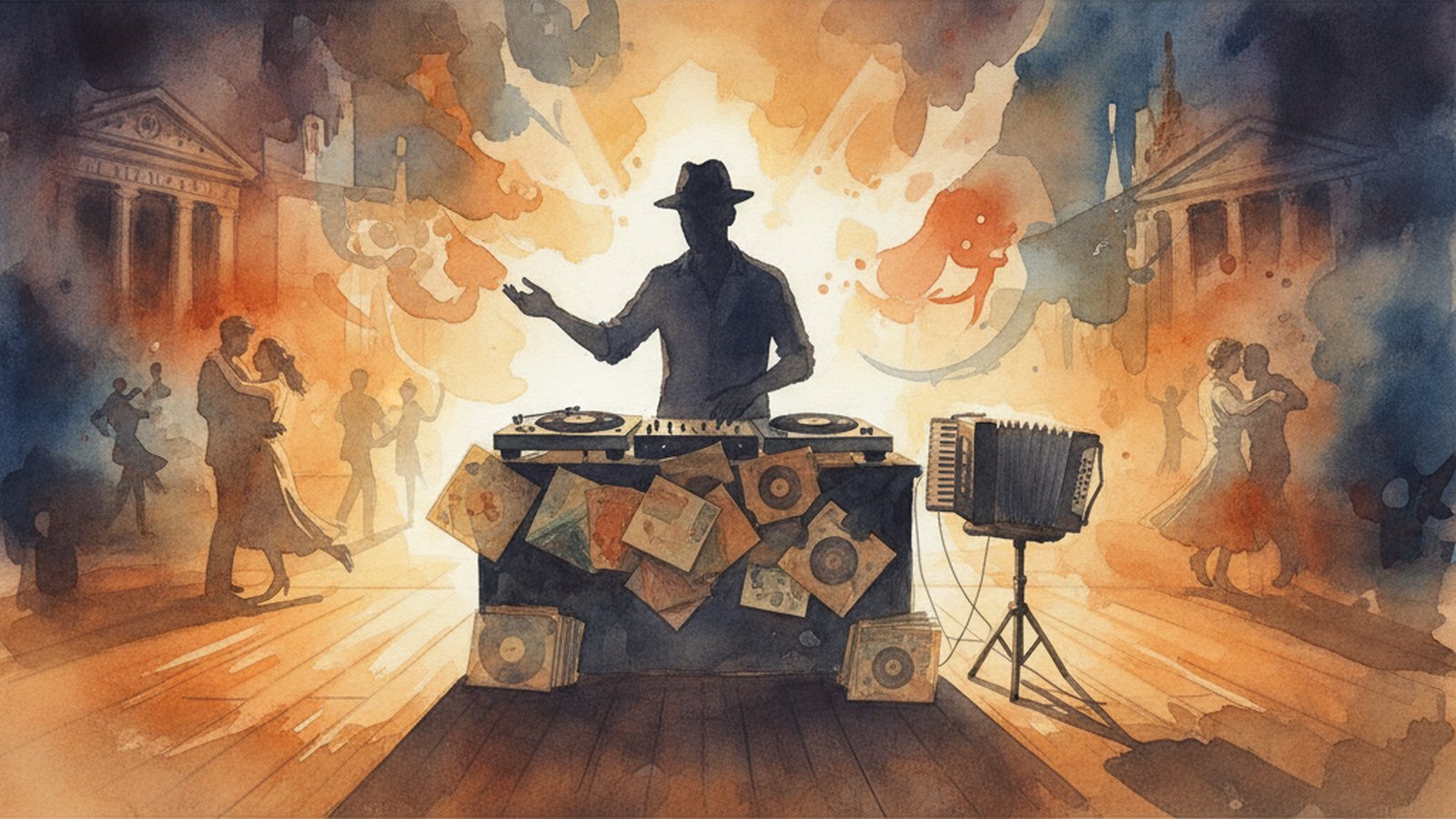
There is a moment, somewhere around two in the morning at a Buenos Aires milonga, when the room stops being a collection of dancers and becomes a single breathing organism. A cortina fades, the floor settles, and a few hundred porteños wait to hear what you will say next. If you have ever wondered what it means to really DJ tango, this is the room that teaches you. You are not playing songs. You are conducting a conversation between the orchestras of the 1940s and the living bodies in front of you.
Whether you spin at Salón Canning, La Viruta, or a neighbourhood práctica in Villa Crespo, the lessons are the same, and they travel beautifully. Here is the craft, distilled from the city where the music was born, for DJs and organisers anywhere from Palermo to London.
Music selection: build your house on the Golden Age
The heart of any milonga is the Época de Oro, roughly 1935 to 1955. Master the four pillars first and everything else falls into place: the relentless rhythmic drive of Juan D'Arienzo, the elegant cantabile of Carlos Di Sarli, the warm storytelling of Aníbal Troilo, and the dramatic, orchestral intensity of Osvaldo Pugliese. These are your four corners. Dancers feel the difference in their feet, even when they cannot name it.
Around those pillars, build your vocabulary: Ricardo Tanturi with Alberto Castillo for joyous, danceable energy; Miguel Caló for romance; Ángel D'Agostino and Ángel Vargas for poetry; Edgardo Donato and Rodolfo Biagi for playful punch. Learn which singers sit inside the orchestra (Fiorentino with Troilo) and which sit on top of it, and you will start hearing tandas before you build them.
Know your transfers
In Buenos Aires, the obsessives talk about transfers as much as orchestras. A muddy, over-compressed MP3 ripped from a ripped CD will betray you on a good sound system. Source clean digitisations, lean on reputable libraries, and trust your ears. The recording is your instrument; keep it in tune.
Tanda construction: the grammar of the night
A tanda is a sentence, and the cortina is the full stop. The grammar is non-negotiable in Buenos Aires: tangos come in fours, valses and milongas in threes, each set separated by twenty to thirty seconds of clearly non-tango music so the floor knows to clear and re-invite.
Inside a tanda, demand coherence. Same orchestra, same era, ideally the same singer and the same mood. Do not pair a sparkling 1938 D'Arienzo instrumental with a brooding 1952 recording just because the label matches. Dancers commit to four songs on the strength of the first eight bars; reward that trust with consistency. The classic rotation that keeps a room happy is two tango tandas, then a vals, two more tango tandas, then a milonga (T–T–V–T–T–M), repeating like a tide.
The sound system: the unglamorous half of the job
Half of great DJing happens before anyone dances. Arrive early. Walk the room, because the floor is rarely loudest where you stand. Old recordings carry harsh upper-mids and hiss, so gently roll off the brittle highs and tame the low-mid mud that turns bandoneóns into soup. Aim for a warm, even level that fills the room without forcing dancers to shout between tandas.
- Reference your levels against a known clean recording so each tanda lands at a consistent volume.
- Never chase loudness. Tango is danced in an embrace; punishing volume kills the connection you are trying to serve.
- Check the far corners, not just the booth. A room with dead spots needs fills, not more master gain.
Reading the dance floor
This is where craft becomes art. A milonga has a wave, and your job is to ride it, not fight it. Open gently to let the room fill, build energy through the night, lift it with a rhythmic D'Arienzo or Biagi tanda when feet get restless, then release into something romantic so couples can breathe.
Watch where people sit, not where they dance. A full floor tells you the last tanda worked. An empty one is the room editing your set in real time.
When you see dancers sitting out vals after vals, the floor is asking for rhythm. When the embraces get long and slow and nobody wants to stop, you have found the room's centre of gravity; stay there a while before you move on.
The Buenos Aires difference: serve, don't perform
The deepest lesson the city teaches is humility. The best tango DJ is nearly invisible. Dancers should leave talking about the night, not about you. Respect the códigos: clear cortinas, predictable structure, and a floor that can rely on the cabeceo and the ronda because the music is steady underneath them. And when the lights come up, close as the city always does, with La Cumparsita. In Buenos Aires it is not a song; it is the way you say goodnight.
Recommended Tandas
Two complete, milonga-tested tandas to drop straight into your next set, one to open with fire and one to lift the room with a vals.
Tanda 1 — Juan D'Arienzo, rhythmic instrumental opener (late 1930s)
- El Flete — Juan D'Arienzo (instrumental), 1936
- Nueve de Julio — Juan D'Arienzo (instrumental), 1935
- El Internado — Juan D'Arienzo (instrumental), 1938
- Don Juan — Juan D'Arienzo (instrumental), 1936
Tanda 2 — Alfredo De Angelis, vals (1940s)
- Soñar y nada más — Alfredo De Angelis, vocals Carlos Dante & Julio Martel, 1943
- Flores del alma — Alfredo De Angelis, vocals Carlos Dante & Julio Martel, 1944
- Pobre flor (El último adiós) — Alfredo De Angelis, vocals Carlos Dante, 1946
Bring Buenos Aires home
You do not need a plane ticket to chase this feeling. London's tango community is alive with milongas, prácticas, and events where you can study the floor, test a tanda, and grow your craft. Explore upcoming milongas and tango events on TangoLife.london, find your room, and go make a night the dancers will remember long after the last cumparsita.
Related Articles

Adapting Your Tango DJ Style for Milongas Around the World
The same record collection lands differently in Buenos Aires, Berlin and London. Here's how to read a tango community and adapt your milonga sets without losing your voice as a DJ.

The Tango DJ Spectrum: From Purist to Eclectic
Purist, traditionalist or eclectic — the label matters far less than the floor. A working guide to repertoire, tanda construction, sound and reading a room, with two complete tandas.

Traditional vs Progressive Tango DJing: Find Your Style
Traditional and progressive tango DJing are less opposed than they look. A working guide to tanda construction, sound levels, reading the ronda, and finding your own voice.