Tango and Cultural Appropriation: Respecting Argentine Roots
Tango and Cultural Appropriation: Respecting the Dance's Argentine Roots
Tango was born in the working-class neighbourhoods of Buenos Aires and Montevideo in the late 19th century, shaped by immigrants from Italy, Spain, and Africa, and by the criollos who called the Río de la Plata home. Today, it is danced in London, Tokyo, Berlin, Istanbul, and hundreds of other cities around the world. This global spread raises an important and sometimes uncomfortable question: when does appreciation become appropriation?
Understanding the Roots
To engage respectfully with tango, we need to understand where it comes from. Tango emerged from the margins of society. Its earliest practitioners were immigrants, formerly enslaved people, and the urban poor. The dance was born in conventillos (tenement houses), patios, and street corners. It was the music and movement of people who had been displaced, marginalised, and overlooked.
This origin matters. Tango was not created in the salons of the wealthy. It was created by communities who had little else but each other, their music, and their bodies. The embrace, the improvisation, the melancholy and passion of the music, all of this carries the DNA of those origins.
Over the decades, tango was adopted by Argentine high society, exported to Paris and beyond, and eventually recognised as a UNESCO Intangible Cultural Heritage of Humanity. But its roots remain in the barrios of Buenos Aires, and the Argentine people rightly regard tango as a core part of their national identity.
When Appreciation Crosses a Line
Cultural appropriation occurs when elements of a marginalised culture are adopted by a dominant culture in ways that strip away context, meaning, and respect. In the tango world, this can take several forms:
- Commercialisation without acknowledgement: Marketing tango as a generic "sexy Latin dance" without reference to its Argentine heritage, reducing a complex art form to a stereotype
- Claiming authority: Non-Argentine teachers or dancers presenting themselves as definitive experts while dismissing or marginalising Argentine voices
- Cherry-picking aesthetics: Adopting tango's visual style (fishnet stockings, rose-in-teeth imagery) while ignoring its cultural depth
- Erasing origins: Teaching or performing tango without any reference to its history, its music tradition, or its cultural significance
These behaviours, whether intentional or not, diminish the culture from which tango springs and can cause genuine hurt to people for whom tango is not a hobby but a heritage.
What Respectful Engagement Looks Like
The good news is that the tango community, including London's vibrant scene, overwhelmingly engages with the dance respectfully. Most tango dancers are deeply drawn to the culture, not just the steps. They study the music, learn about the golden age orchestras, travel to Buenos Aires, learn Spanish, and build genuine relationships with Argentine dancers and teachers.
Respectful engagement with tango includes:
Learning the history. Understanding that tango has a rich, specific history rooted in Argentine and Uruguayan culture. Knowing the names of the great orchestras, the significance of the golden age, and the social context that shaped the dance gives depth to your practice.
Honouring the music. Tango music is not interchangeable background sound. Each orchestra has a distinctive character. Learning to distinguish D'Arienzo from Troilo, Di Sarli from Pugliese, is not just educational but transforms your dancing. It also honours the musicians who created this extraordinary body of work.
Supporting Argentine teachers and artists. London is fortunate to host visiting maestros from Buenos Aires regularly. Attending their workshops, supporting their events, and valuing their perspective acknowledges the living tradition from which we all draw.
Using the language respectfully. Tango vocabulary is Spanish. Using terms like milonga, tanda, cabeceo, and ocho correctly, with proper pronunciation, shows respect for the language of the dance.
Travelling to Buenos Aires. For those who can, dancing in the milongas of Buenos Aires is a profound experience that deepens understanding and respect. It's one thing to learn about tango's roots; it's another to feel them beneath your feet.
The Tension Between Preservation and Evolution
One of the more nuanced aspects of this discussion is the tension between preserving tango's traditions and allowing it to evolve. Tango has always been a living, changing art form. Even in Argentina, the tango danced today is different from the tango of the 1940s. Should the global tango community feel bound to replicate a specific historical form, or is it free to innovate?
There is no single answer, but a few principles can guide us:
- Innovation that honours origins is different from innovation that ignores them. Neotango, alternative tango, and other contemporary forms can coexist with traditional tango, provided they acknowledge where they come from
- The Argentine community's voice matters. When Argentine dancers express discomfort with how their culture is being represented, that feedback deserves genuine consideration
- Diversity of interpretation is healthy, but it should coexist with, not replace, understanding of the traditional form
London's Unique Position
London's tango scene is one of the most diverse in the world. Dancers from dozens of nationalities share the floor on any given night. This diversity is a strength, but it also carries responsibility.
London dancers can honour tango's Argentine roots by:
- Attending events that feature Argentine DJs and musicians
- Supporting the Argentine teachers who live and teach in London
- Learning about tango's cultural context, not just its steps
- Challenging stereotypical representations of tango when they encounter them
- Creating space for Argentine voices in discussions about the dance's direction
The Role of Teachers
Teachers bear a particular responsibility in this area. They are the primary transmitters of tango culture to new dancers. A teacher who presents tango purely as a set of physical techniques, divorced from its cultural context, misses the opportunity to create informed, respectful practitioners.
Good tango teaching includes:
- Sharing the history and cultural significance of tango
- Playing music from the traditional orchestras and explaining their significance
- Teaching the social codes that come from Buenos Aires milonga culture
- Being transparent about their own relationship to the culture: what they've learned, from whom, and what they're still learning
"Tango is a gift from Argentina to the world. Like any gift, it should be received with gratitude, handled with care, and honoured for what it is."
Appreciation, Not Appropriation
The vast majority of tango dancers worldwide, including in London, engage with the dance from a place of genuine love and respect. They are not appropriating; they are appreciating. They are participating in a global dialogue with a living art form, adding their own experience while honouring what came before.
The key is consciousness. Being aware of tango's origins. Being respectful of its cultural significance. Being willing to listen when Argentine dancers and musicians share their perspective. And being humble enough to recognise that, no matter how long we've danced or how well we dance, we are guests in a tradition that belongs first and foremost to the people who created it.
Tango's globalisation is not inherently problematic. It's beautiful that a dance born in the barrios of Buenos Aires now brings joy to millions worldwide. What matters is that this globalisation carries respect, acknowledgement, and gratitude alongside it.
Deepen your understanding of tango culture and find classes, milongas, and events at TangoLife.london.
Related Articles

The Conventillo: How a Shared Patio Gave Birth to Tango
Tango did not begin in a ballroom. It began in the shared courtyard of a Buenos Aires tenement — and the habits that patio taught still explain how we dance in London halls tonight.

The 1980s Tango Revival: How a Dying Dance Came Back
By the late 1970s Argentine tango was down to a handful of milongas and a missing generation. Here is how a Paris theatre run and a few old milongueros brought it roaring back.
How Immigration Shaped Tango: The Buenos Aires Story
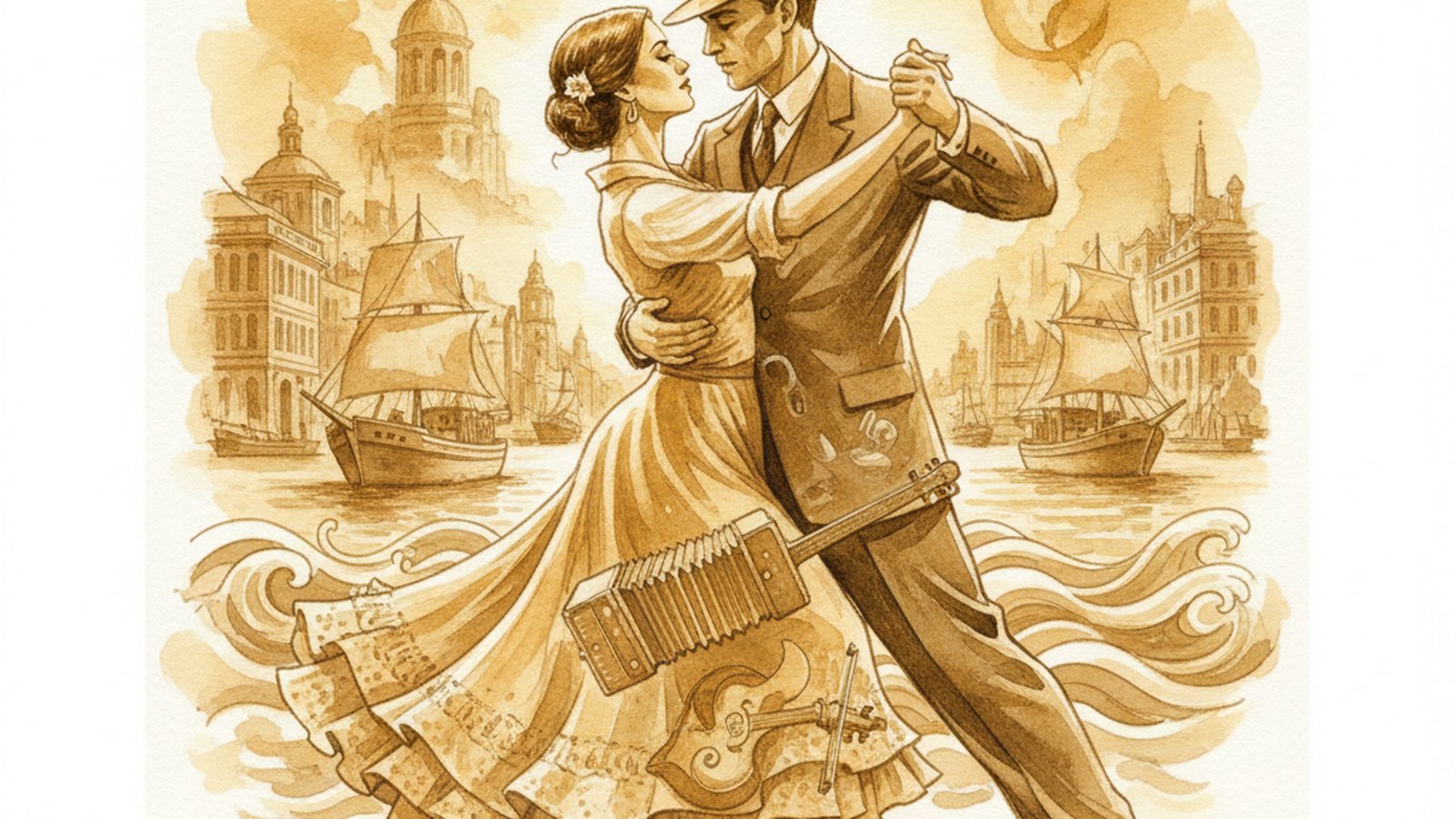
Tango was invented by strangers, for strangers, in a Buenos Aires where half the city was foreign-born. Here is how Italian, Spanish, German and African arrivals built the dance we do in London.