The Backward Step: Why Followers Need Strong Back Technique
The Step Nobody Sees But Everyone Feels
If there's one movement that defines the follower's role in tango, it's the backward step. Followers spend a significant portion of every dance moving backward — and yet this is often the most underdeveloped aspect of their technique. In class, forward movement gets the spotlight. At milongas, backward steps happen in the shadows of the embrace, invisible to onlookers but absolutely felt by both dancers.
Developing a strong, confident, beautiful backward step isn't just a technical improvement — it transforms the entire quality of your dance and your partnership.
Why Backward Steps Are Harder Than They Look
Moving backward is inherently less natural than moving forward. Our bodies are designed for forward locomotion — our eyes face forward, our weight naturally tips forward, and our reflexes are tuned to the direction we're heading. Ask someone to walk backward, and you'll immediately see tension, shortened steps, and a tendency to look over their shoulder.
In tango, the follower must overcome all of these instincts while also:
- Maintaining an upright posture and stable axis
- Staying connected to the leader through the embrace
- Projecting the leg backward with intention and control
- Transferring weight smoothly and completely
- Moving musically, not just mechanically
- Navigating a floor they can't see, trusting the leader to steer
That's an extraordinary amount to coordinate simultaneously, which is why a good backward step requires dedicated practice.
Anatomy of a Beautiful Backward Step
Let's break down what a technically sound backward step looks like:
1. The Reach
The step begins with the free leg reaching backward from the hip. The toe reaches first, brushing the floor as it extends. This isn't a fall backward — it's a controlled projection of energy behind you. Think of it as placing your foot intentionally, not collapsing into the step.
Common problems:
- Stepping too short — fear of losing balance causes truncated steps that feel choppy to the leader
- Stepping too wide — the foot goes out to the side rather than directly behind, creating a zig-zag path
- Slamming the foot down — placing the foot with control, starting with the toe, creates smoothness
2. The Transfer
Once the foot is placed, weight must transfer fully onto it. This is where many followers struggle. An incomplete weight transfer leaves them stuck between two feet, unable to move freely in any direction. The leader feels this as heaviness or resistance.
The transfer should feel like pouring water from one glass to another — smooth, complete, and continuous. At the end of the transfer, you should be able to lift the front foot without any adjustment.
3. The Collection
After the weight transfer, the free leg (now in front) needs to collect — drawing back to meet the standing leg before the next step. This moment of collection is crucial. It's a brief reset that keeps the follower organised and ready for whatever comes next.
Skipping the collection creates a feeling of perpetual falling backward. Honouring it creates elegance and control.
4. The Posture
Throughout all of this, the upper body stays lifted, the chest stays open, and the connection to the leader through the embrace remains consistent. The temptation when stepping backward is to lean forward (counterbalancing the backward movement) or to look down. Both compromise the embrace and the follower's balance.
My teacher told me: "Your legs go backward but your heart stays forward." That image changed everything about my backward walk.
Why Leaders Should Care About the Follower's Back Step
Leaders, this article is for you too. Understanding the demands of the backward step makes you a better leader because:
- You'll lead with more clarity — knowing what the follower needs to execute allows you to provide clearer signals
- You'll give time — a rushed lead doesn't allow the follower to reach, place, and transfer properly. Giving an extra fraction of a second transforms the quality of the step
- You'll navigate better — remembering that your follower is moving backward without sight makes you more protective and aware of the space behind them
- You'll appreciate the skill — when you feel a follower take a beautiful backward step, you'll recognise the technique behind it
Exercises to Strengthen Your Backward Step
Solo Drills
- Slow backward walk: Walk backward across a room at half speed. Focus on toe reaching first, smooth transfer, complete collection. Use a mirror if possible to check your posture
- Backward walk with pauses: Take one backward step, then pause for three seconds standing on one foot. This trains balance at the most vulnerable moment of the step
- Backward walk to music: Put on Di Sarli and walk backward to the beat. Then try half-time. Then try walking to the melody rather than the beat
- Backward ochos: Step back on a diagonal, pivot, step back on the other diagonal. Focus on the quality of each backward step, not just the pivot
- Eyes closed backward walk: In a clear space, close your eyes and walk backward. This forces you to rely on proprioception rather than vision — exactly what happens in close embrace
Partner Exercises
- Walking meditation: Leader walks forward, follower walks backward, in close embrace, for an entire tango song. No figures, no pauses — just walking. Focus entirely on the quality of each backward step
- Feedback walk: Same exercise, but the leader gives real-time feedback: "I felt that one was incomplete" or "That transfer was beautiful." Honest, kind communication accelerates learning
- Speed variations: Leader varies the speed — fast steps, slow steps, pauses. The follower's backward step quality should remain consistent regardless of tempo
The Backward Step as Musical Expression
Beyond technique, the backward step is a canvas for musical expression. A long, slow, reaching backward step can express the sustain of a violin phrase. A quick, precise backward step can articulate a staccato rhythm. A backward step that pauses mid-transfer can echo a musical suspension.
When followers discover that their backward step can be musical — not just functional — a whole new dimension of the dance opens up. You're no longer just going where the leader sends you; you're contributing your own interpretation of the music through the quality of your movement.
Trust and the Backward Step
There's a deeper dimension to the backward step that goes beyond technique. Moving backward requires trust — trust that your leader is guiding you safely, trust in your own body's ability to maintain balance, and trust in the process of letting go of visual control. This act of trust is one of tango's most beautiful paradoxes: in surrendering control of direction, the follower gains expressive freedom.
When the trust is there and the technique is solid, the backward step becomes one of tango's most satisfying movements — for both dancers.
Develop your backward step and every other aspect of your tango at classes across London. Browse the full schedule at TangoLife.london.
Related Articles
Collecting Your Feet: The Micro-Movement That Cleans Up Dance
Collection — bringing your feet together between steps — is the micro-movement that transforms messy tango into clean, elegant dance. Here's how to master it.
The Tango Class Warm-Up: Exercises That Prepare You to Dance
A good tango warm-up does more than prevent injury — it activates balance, dissociation, and body awareness. Here are exercises that actually prepare you to dance.
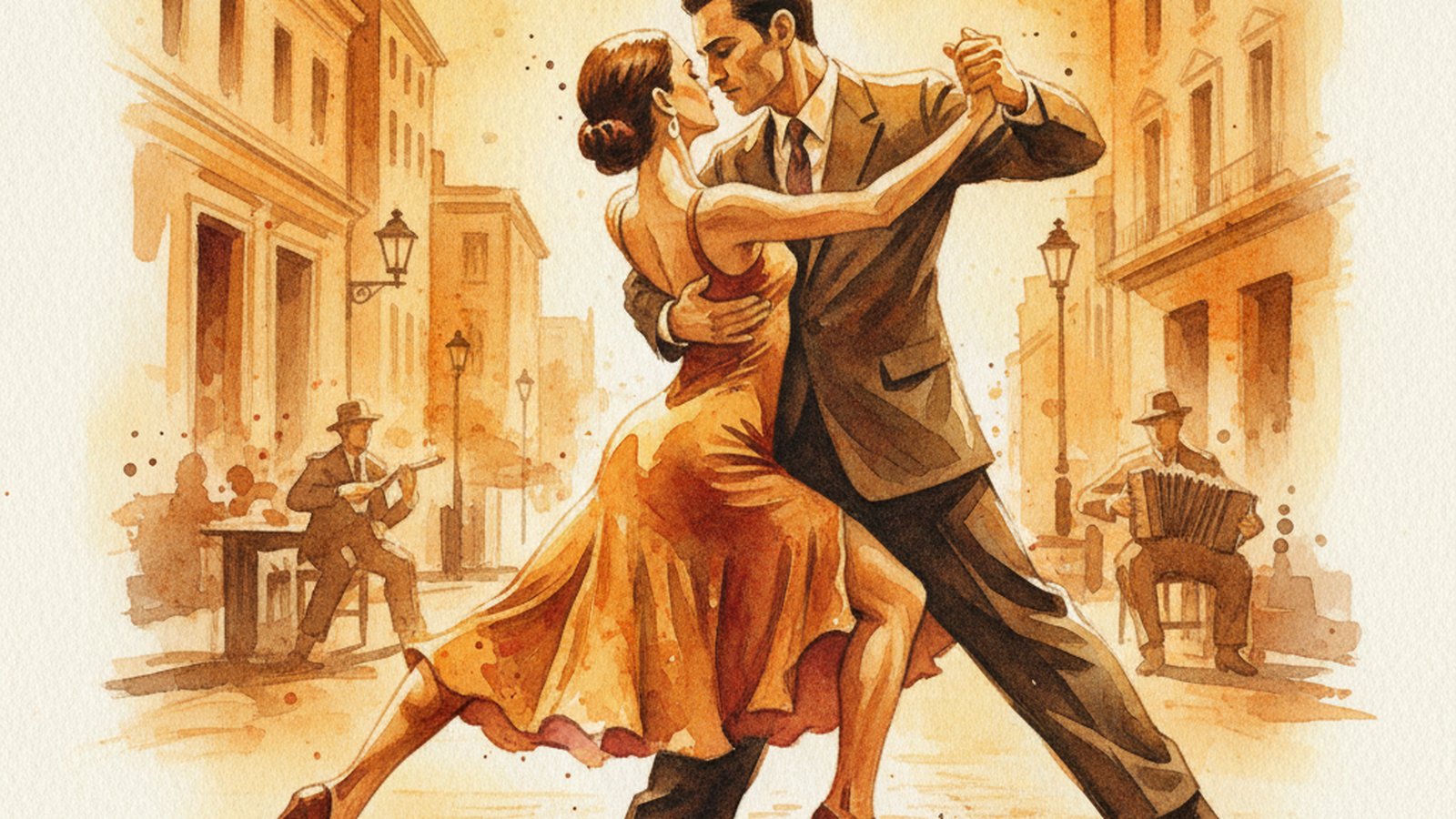
The Follower's Back Step: Tango's Most Underrated Skill
Followers spend much of every tango travelling backwards, blind and on trust. Here's why a strong, grounded back step quietly defines a great dancer.