The Side Step: Creating Space and Rhythm in Tango
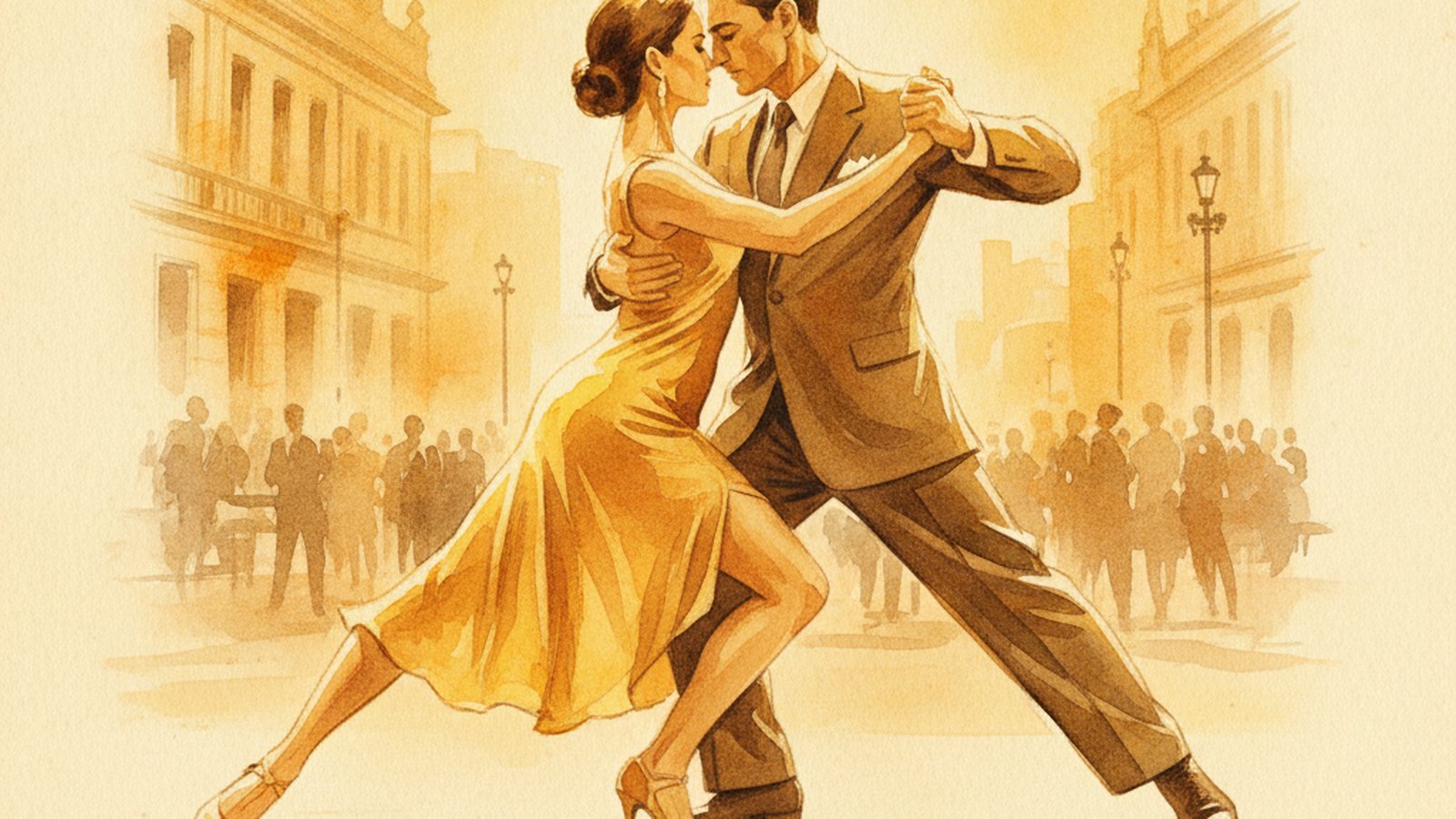
Ask most newcomers what tango is made of and they'll picture the dramatic moves — the sweeping boleo, the flicking gancho, the photogenic dip. Few mention the side step. Yet the humble step to the side, the paso al costado, is one of the most quietly powerful tools in the entire dance. It is where space is made, where rhythm is shaped, and where many of tango's most musical moments are born.
If you dance in London — whether you're three weeks into a beginners' course in Hackney or a seasoned milonguero who haunts the late-night floors of Soho — getting comfortable with the side step will change how you move. Let's take it apart.
What the side step actually is
The side step, or apertura when it opens out of a resting position, is a lateral weight transfer. You move sideways across the floor rather than forwards or backwards. It sounds simple, and mechanically it is — but the quality of that step reveals everything about a dancer's balance, intention, and connection.
A good side step has a few non-negotiable ingredients:
- A genuine weight change. You don't just reach the foot out; you travel onto it, fully arriving over the new standing leg before anything else happens.
- The free leg collecting. After arriving, the other foot draws back underneath you. In tango we almost always pass through the collected position — ankles together — before the next movement. This is the secret to looking grounded rather than scrambling.
- Dissociation. The chest stays facing the partner while the lower body travels. This is what keeps the embrace intact and the lead clear.
Why beginners undervalue it
In a typical first class, the side step appears almost immediately — it's the second move in the classic eight-count basic. Because it shows up so early, many dancers file it away as "done" and stop refining it. That's a mistake. The side step is not a beginner's stepping stone to fancier figures; it is a lifelong study. Watch any great social dancer and you'll see they spend an enormous proportion of a song simply stepping side to side, and making it look like the most interesting thing in the world.
How the side step creates space
Tango is a dance of navigation. On a busy London floor — and anyone who has danced a packed Saturday milonga knows how busy that can get — your job as a couple is to find and use space without colliding with anyone. The side step is your primary spatial negotiator.
Forward and back steps eat up the line of dance. Side steps let you breathe inside it.
When the couple ahead of you stops, you don't need to stop dead and wait awkwardly. A leader can step the couple sideways, drift gently along the lane, or rotate around a single axis using side steps as the engine. This is the foundation of good floorcraft: the ability to keep dancing musically in a small footprint without barging forward into traffic.
Practically, the side step lets you:
- Open and close the couple's footprint — a small side step to reposition, a larger one to claim space when the floor allows.
- Change lanes safely by drifting laterally rather than cutting across.
- Create room for the follower's embellishments — a well-placed side step gives the follower's free leg somewhere to go.
- Reset after a turn, landing the couple cleanly back into the line of dance.
A note for followers
Followers, the side step is yours to own too. A side step received passively feels like being dragged; a side step met actively feels like a conversation. Arrive fully onto your standing leg, let your free foot collect with intention, and you give the leader clear information about where you are. That clarity is what lets the couple move as one body through a crowd.
How the side step creates rhythm
Here is where the side step becomes genuinely thrilling. Because it doesn't commit you to travelling down the line of dance, the side step is the perfect canvas for playing with time.
Try this idea the next time a crisp D'Arienzo tanda comes on. Instead of marching through figures, simply step side… and pause. Then step side again on a strong beat. Now try a quick-quick — two fast side steps stitched together — followed by a long, luxurious slow where you simply settle into the weight and let the music carry you. You've just done traspié-flavoured rhythmic play with nothing more than lateral movement.
The side step is rhythm's playground because:
- It can be any length. Tiny and quick for staccato music, wide and slow for lyrical phrases.
- It can be paused on either foot, letting you sit inside the music and wait for the next thing you want to mark.
- It naturally invites the double-time traspié, that syncopated change-and-change-back that gives milonga and rhythmic tango their bounce.
Suddenly a single side step can become an entire phrase of music — and your dance feels conversational rather than choreographed.
Practical ways to improve your side step
You don't need a partner or a studio to work on this. A few minutes at home in socks will do.
- The wall test. Stand with your back near a wall and step side to side, checking that your head stays at the same height. If you bob up and down, you're pushing off rather than transferring weight smoothly.
- Collect every time. Insist on bringing your ankles together between steps. Slow it right down until it's clean, then add speed.
- Step to the music, not the count. Put on a clear, rhythmic orchestra — Biagi, D'Arienzo, Tanturi — and let the beat decide when you step. Practise pausing for a whole bar.
- Dance smaller. Many London floors are tight. Practise side steps so small they barely cover a tile. Control at small scale is what makes you welcome on a crowded floor.
The London context
London's tango scene is wonderfully varied, but it shares one feature with Buenos Aires: the good milongas get full. From the intimate practicas dotted around the city to the grand weekend events, the dancers everyone wants to embrace are rarely the ones with the biggest moves. They're the ones who can make a single side step feel musical, generous, and completely secure. That is a skill built one careful lateral weight change at a time.
So next time you're on the floor, give the side step the attention it deserves. Make space with it. Make rhythm with it. Let it be the move you actually want to do, rather than the one you rush through to get to something flashier.
Come and put it into practice
The best way to develop your side step is to use it in the embrace, surrounded by music and good company. London's milongas, practicas, and classes happen somewhere in the city almost every night of the week. Browse what's on and find your next dance over at TangoLife.london — your next favourite floor, and a hundred chances to make beautiful space and rhythm, are waiting.
Related Articles

Tango Vals: How to Dance with Swing and Flow, Not Counting
Vals isn't one-two-three. Learn to step on beat one, add swing with optional steps, and find the continuous, circular flow that makes tango vals feel like flying.
Milonga Lisa vs Con Traspié: Two Ways to Dance One Rhythm
Milonga lisa keeps it smooth; con traspié adds the cheeky syncopation. Here's how to hear, dance, and choose between both on a London floor.
Caminata Musicale: Turn Your Tango Walk Into Music
The caminata is tango's foundation — but with timing, dynamics and phrasing, a simple walk becomes a musical conversation. Here's how to build yours.