Cortina Etiquette: What to Do Between Tandas at a Milonga
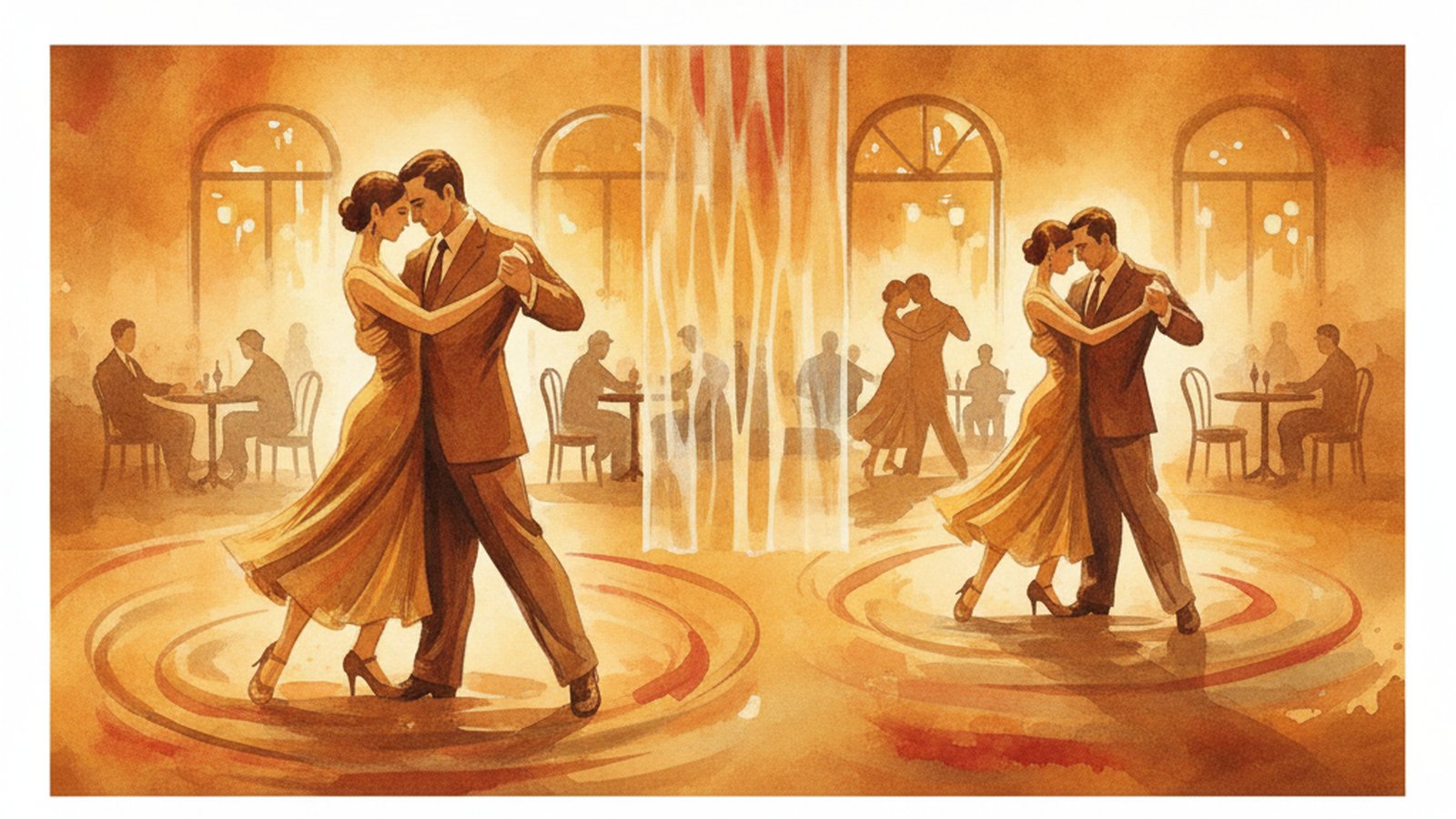
The forty seconds that shape your night
You have just finished a tanda. The last chord of D'Arienzo fades out, and something else arrives — a snatch of jazz, a bit of Bowie, forty seconds of something emphatically not tango. This is the cortina, and in most London milongas it is the least discussed and most quietly influential part of the evening.
The word means curtain, and that is exactly the job it does: a curtain drawn between two acts, closing one partnership and giving everyone a clean start for the next. Learn to use it well and the whole night opens up. Ignore it and you may spend a lot of the evening at the edge of the floor, wondering why nobody seems to be looking at you.
Where the cortina comes from
The convention travelled here from the milongas of Buenos Aires, where the DJ — the musicalizador — groups recordings into tandas of three or four tracks by the same orchestra, from the same era, in the same mood, then separates them with a deliberately undanceable piece of non-tango music. It is a practical device rather than a ceremony, and it does three jobs at once:
- It clears the floor. The room resets, the space is redistributed, and the crowding that built up over twelve minutes dissolves.
- It ends partnerships cleanly. Nobody has to invent a reason to stop dancing, and nobody has to work out how to ask.
- It marks the music. A new orchestra is coming. You get a moment to hear the first bars and decide whether it is one you want.
That middle point is the generous one. The cortina exists so that no one is ever trapped. Everything else about cortina etiquette flows from protecting that.
The cortina is not a pause in the milonga. It is the part of the milonga where the invitations happen.
What to actually do in those forty seconds
1. Thank your partner, and walk them off
A simple thank you or gracias at the end of the tanda is the whole ritual. In Buenos Aires the leader traditionally escorts the follower back to roughly where they were sitting or standing. London is less formal about this, but it still reads as gracious — and, practically, it means neither of you is stranded alone in the middle of the floor.
One thing worth knowing: saying thank you partway through a tanda is the accepted signal that you would like to stop. It is not rude to use it, and it is not a catastrophe to receive it. Sore knee, wrong music, bad connection, too much wine — there are a hundred reasons and you are not owed any of them.
2. Clear the floor properly
Not the edge of it. Off it. In tight London venues the difference between standing two steps inside the dance space and two steps outside it is the difference between a comfortable first song and a scrum. If you have found yourself deep in conversation on the dance floor as the next tanda starts, you are the traffic.
3. Look up
This is the real work of the cortina. The cabeceo — the invitation made by eye contact and a small nod, met by the mirada, the look that says yes, I am available — almost entirely happens in this window. Once the first song is playing, most of the room has already paired off.
So during the cortina: put the phone away, lift your chin, and scan slowly. Give people time to catch your eye. If you are talking to someone at the bar, angle yourself so you can still see the room. If you spend every cortina studying the floor, you have effectively made yourself invisible, and then the evening feels unfriendly for reasons that have nothing to do with the community.
4. Reset your body
Water. Shoes. Shoulders down. Twelve minutes of close embrace is more physical work than it feels like at the time, and the cortina is your only reliable maintenance window. Serious dancers treat it like a pit stop.
5. Listen to the first bars
Good DJs give you a taste of what is coming almost immediately. If you are one of those people who lights up for Pugliese and quietly deflates for a vals, the cortina is when you find out — and it is a perfectly legitimate basis for accepting or declining the next dance.
The quiet mistakes
- Dancing through the cortina. Occasionally the DJ plays something irresistible and a couple of people mess about to it. Fine, in the right room. But it blocks everyone else's invitations and it delays the reset.
- The long negotiation. Standing in the middle of the floor arranging the rest of your evening with someone while forty other people wait for the space.
- Holding someone hostage. A friendly chat is lovely. A chat that runs through the entire cortina and into the first song means your companion has lost a tanda they may have wanted. Watch for the glance towards the floor and release people cheerfully.
- Two tandas in a row. Not forbidden, but in most rooms it is read as a statement. Know that it is being read that way and decide accordingly.
- Leaving your partner mid-floor. Turning and walking off the instant the music stops is the one thing that genuinely stings, and it costs nothing to avoid.
A few London specifics
London milongas run in church halls, basement bars, upstairs rooms in pubs and grand old assembly rooms, and the etiquette bends to fit the room. In a packed Friday night venue with pillars and a bar queue, clearing the floor quickly is not politeness, it is logistics. In a smaller, chattier practica the whole thing is looser and nobody minds if you drift off mid-cortina.
Cortina length varies a lot between our DJs. Some give you a generous minute; some cut you off at twenty-five seconds and expect the room to move. Spend one evening noticing how long your local DJ's cortinas run and you will stop being caught out.
You will also notice that many London DJs use a signature cortina — the same track all night, or a running theme. It is a small kindness: after an hour your body recognises the first note and starts leaving the floor before your brain catches up. If you DJ, this is the single easiest thing you can do for a room full of newcomers.
And be aware that not every London milonga clears the floor rigorously. Some do, some are relaxed about it. Read the room rather than enforcing a rule at people — the etiquette exists to make the evening kinder, not to give anyone something to be right about.
If you are new
Do three things and you are already doing this well: thank your partner, walk off the floor, and look up. That is genuinely it. Nobody expects a beginner to know the whole Buenos Aires codigo, and the dancers worth dancing with are not keeping score.
If a cortina leaves you standing alone and slightly exposed, remember that everyone in the room has felt that. Walk somewhere with a purpose — the water jug, your bag, a friend — and keep your eyes up on the way.
If you have been dancing a while
The cortina is where you can quietly change someone's night. It takes about four seconds to notice who has been sitting for three tandas, and about two more to catch their eye. Newcomers in particular do not yet know how to make themselves visible, and the friendliest rooms in London are friendly because a handful of experienced dancers use the break to look outward rather than inward.
That is the whole secret of the cortina, really. It is not dead air between the good bits. It is where the community part of this social dance actually takes place — the hellos, the introductions, the are you going on Saturday? The dancing is what we come for; the cortina is how we stay.
Put it into practice
The fastest way to internalise any of this is to stand in a few different rooms and watch how they breathe. London has milongas, practicas and classes running most nights of the week, each with its own tempo between the tandas.
Browse what is on this week at TangoLife.london, pick a milonga you have not tried yet, and spend one evening paying attention to the forty seconds nobody talks about. We will see you on the floor — and, just as importantly, at the edge of it.