Tango Nerves: Dancing With More Experienced Partners in London
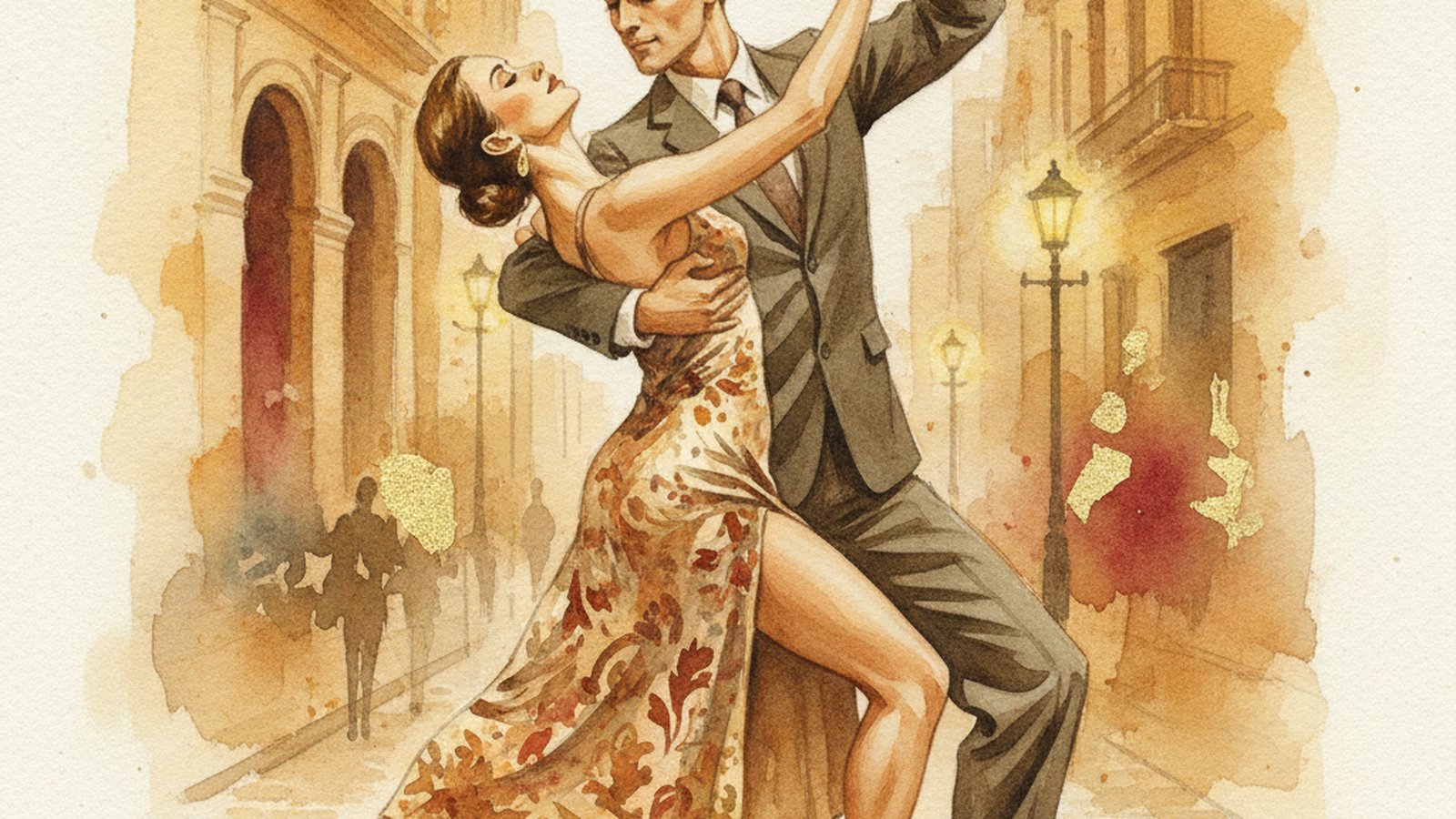
You know the moment. It is half past ten on a Friday night, the floor has thinned just enough to see across it, and the dancer you have been quietly watching all evening — the one whose walk makes the whole room look up — glances your way during the cortina. And you look at your shoes. Not because you don't want the tanda. Because you want it so badly that the thought of wasting it is unbearable.
Nearly everyone in London tango has done this. The beginner who has been going to class for six weeks does it. So does the dancer who has been at it for eight years and still feels like a fraud next to the visiting maestro. Intimidation is not a beginner problem. It is a tango problem, and it costs the scene a great many lovely dances that never happened.
Where the intimidation actually comes from
Tango is unusual among social dances in that it puts you in a stranger's arms for twelve minutes with no choreography to hide behind. There is nowhere to look, nothing to count, no routine to fall back on when your mind goes blank. That vulnerability is precisely why we love it — and precisely why it can feel like an exam.
The specific fear is almost always the same: that the experienced dancer will be bored, or worse, disappointed. That they will spend the tanda politely enduring you and then quietly avoid your eye for the rest of the year.
It is worth saying plainly: this is largely a story you are telling yourself. Not entirely — tango has its share of egos, and we will come to those — but largely.
What experienced dancers are actually thinking
Ask around at any London milonga and you will hear the same handful of answers about what makes a tanda good. Almost none of them are about technique.
- Do you feel present? An experienced dancer would rather share a simple, attentive walk than fight through decorations with someone who is somewhere else entirely.
- Are you comfortable to hold? A calm, honest embrace beats a complicated one every time.
- Are you listening? Not to them — to the music. Musicality is not an advanced skill. It is the first one.
- Do they have to manage you? Anxiety is contagious. Apology is exhausting. Calm is generous.
There is also a less romantic truth: many experienced dancers enjoy dancing with beginners because it is easy. They do not have to prove anything. They can walk to Di Sarli, feel the floor, and have a genuinely lovely time. The pressure you imagine they feel is usually pressure they left behind years ago.
Set yourself up before you even ask
Start at a practica, not at the deep end
London is well served here. Most weeks there is a practica somewhere — a church hall in Islington, an upstairs room in Bloomsbury, a Sunday afternoon in a railway arch — where the rules are explicitly relaxed. You can stop. You can ask a question. You can dance the same tanda twice. Approaching a more experienced dancer in that setting removes about ninety per cent of the stakes, and many of them come specifically to help.
Pick your moment
Do not aim for the peak-crowd tanda at eleven when the floor is a moving traffic jam and navigation is genuinely hard. Aim earlier, when there is space, or later, when the room has softened. If you are still building confidence in navigation as a leader, a packed London floor is the worst possible place to prove yourself.
Let the music choose for you
If you are newer, go for a tango tanda rather than vals or milonga. Vals is relentless and milonga is unforgiving of hesitation; a slow, wide-open D'Arienzo or a lyrical Fresedo gives you room to breathe. Save the milonga tanda for when your feet are warm.
Know the room's mirada habits
London is a mixed scene, and its invitation customs vary by venue. Some rooms run a fairly strict cabeceo; others are perfectly happy with a walk-over and a smile. Watch for ten minutes before you decide which you are dealing with — following the room's convention makes you look like someone who belongs there, which is half of confidence.
Five things that make you a good partner at any level
- Arrive on your own axis. Do not hang, do not lean, do not grip. Carry your own weight and you have already solved most of what makes a partner tiring.
- Walk well and stop apologising for walking. A beautiful walk is the whole dance. Nobody at a milonga is grading you on your gancho count.
- Wait. Followers: finish your step and let it land. Leaders: give the step time to complete. Most awkwardness in tango is a rushing problem, not a knowledge problem.
- Breathe out. Held breath travels straight through the embrace. One deliberate exhale as the music starts changes the entire tanda.
- Let the mistake go. A missed step that you release in half a second is invisible. The same step, followed by a wince and a whispered explanation, becomes the thing your partner remembers.
Stop saying sorry — yes, this is a London problem
The British reflex to apologise is a genuine obstacle in tango. In a twelve-minute tanda, six murmured sorries do not read as humility; they read as distress, and your partner will spend the rest of the dance reassuring you instead of dancing with you.
Every apology asks your partner to do emotional work. Every recovered step, taken quietly and without comment, gives them a gift. Choose the second one.
If you must acknowledge something, do it once, lightly, at the end of the tanda — or better, with a smile mid-song and nothing said at all.
When it genuinely doesn't go well
Sometimes it won't. You will get the dancer who spends the tanda visibly counting the songs, or the one who decides that what you really need is an unrequested lesson in the middle of a milonga. This happens, and it is worth naming rather than pretending it away.
Two things are true here. First, an unsolicited correction on the social floor says considerably more about that dancer than about you — most people in the room will read it that way too. Second, you are allowed to decline. Sitting a tanda out, or saying "thank you, I'm going to sit this one" is entirely normal etiquette and no one who matters will think less of you. Feeling intimidated should never tip into feeling obliged.
And if a tanda is simply mediocre — no drama, just not much connection? That is not a verdict. Experienced dancers have flat tandas constantly. It usually means nothing at all.
The scene is smaller than you think
Here is the quiet advantage of dancing in London: for a city this size, the tango community is remarkably small and remarkably repetitive. You will see the same faces from Bloomsbury to Bermondsey. The dancer who feels unreachable tonight will be sitting next to you at a workshop in three months, complaining about the same parking situation.
Which means intimidation is mostly a timing problem. Go regularly, be pleasant to sit with, learn people's names, and turn up to the practicas. Advanced dancers give tandas to people they know and like far more readily than to strangers who dance slightly better. Being part of the room is a faster route to good dances than being impressive in it.
Six months from now, someone newer than you will be avoiding your eye across the floor, convinced you are out of their league. Try to remember to catch it, and nod.
Find your next tanda
The only real cure for tango nerves is milonga hours — and London gives you plenty of chances to collect them. Browse the milongas, practicas, classes and workshops happening across the city on TangoLife.london, pick a practica this week, and go make eye contact with someone slightly terrifying. Chances are they have been hoping you would.
Related Articles

Tango World Championship: What the Mundialito Means in London
Tango's world championship is judged on the walk, the embrace and how you treat the ronda — the very things that make a good social dancer. Here's what it means for London floors.
How to Dress for a Tango Birthday Milonga: Celebrating in Style
The birthday vals means dancing with half the room in a row. Here is how to dress for it: fabrics, shoes, London layering and five practical style tips for celebrating properly.
Cortina Etiquette: What to Do Between Tandas at a Milonga
The cortina is only forty seconds long, but it is where invitations are made, partnerships end gracefully and the room resets. Here is how to use it well at London milongas.