The Tango Warm-Up: Exercises That Truly Prepare You to Dance
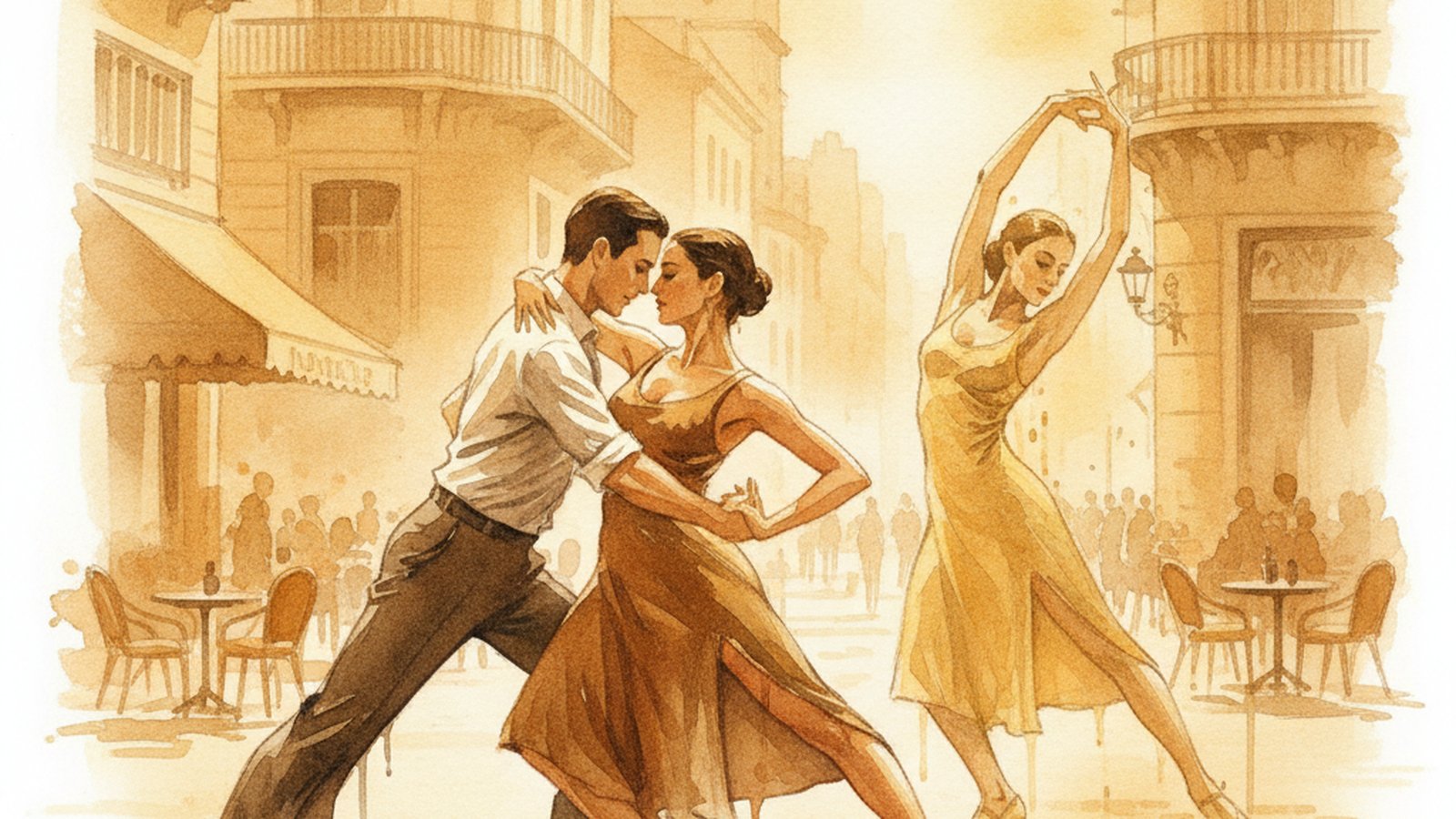
We have all done it. You rush from the Tube, peel off your coat, change your shoes in a corner, and the first thing your body does on a London tango floor is attempt a back ocho on a cold ankle. The class warm-up gets treated as the bit you can skip if you are running late, the gentle filler before the real dancing begins. But a good warm-up is not filler. It is the quiet work that decides whether your evening feels graceful or like a polite wrestling match.
This is not about stretching for the sake of it. It is about waking up the exact systems tango asks for: your axis, your feet, your ability to twist, and your capacity to feel another person through the embrace. Here is what actually prepares you to dance.
Why the tango warm-up is different
Most sports warm-ups are about raising your heart rate and loosening big muscles. Tango needs something stranger. It is a low-impact dance built on tiny, precise actions: transferring weight from one foot to the other without wobbling, rotating your upper body against your hips, staying balanced over a single leg while someone leans gently into your chest.
That means our warm-up is less about sweat and more about connection between body parts — and between you and your partner. Spend ten focused minutes here and your giros stop being scary, your boleos stop being yanked, and your back stops complaining at the end of a long milonga.
Start from the ground up: feet and ankles
Everything in tango is paid for through the feet. Cold ankles are the single most common reason beginners feel unstable and advanced dancers pick up niggling injuries.
- Ankle circles: Lift one foot, draw slow circles with the toes, ten each direction. Feel the joint mobilise rather than crack.
- Rolling through the foot: Stand tall and slowly press from heel to ball to toe, then reverse. This is the exact action of a tango walk, rehearsed in slow motion.
- Point and flex: Brush one foot along the floor and point through the toes, the way you would in a soft lápiz. Switch sides.
Do these in your dance shoes if you can. A warm ankle in trainers is not the same as a warm ankle in a stiletto or a leather-soled shoe.
Find your axis
If there is one word that matters more than any step, it is axis — your own vertical line of balance. Tango is danced over one leg at a time, so being able to stand calmly on a single foot is not advanced technique; it is the foundation.
You cannot give your balance to a partner if you have not first found it in yourself. A confident embrace begins with a confident axis.
Try this: stand with feet together, lengthen up through the crown of your head, and let your shoulders drop. Slowly shift all your weight onto your right foot until the left could lift off without effort. Hold for a few breaths. Shift back. This weight transfer drill is the most useful thing you can practise, and it is the move you will do thousands of times in a single tanda.
A balance test worth doing
Once warm, rise gently onto the ball of one foot and hold for five seconds. Wobbling is information, not failure — it tells you which ankle needs more attention before you dance.
Dissociation: the engine of tango
Here is the bit that feels odd at first and unlocks everything later. Disociación is the ability to rotate your upper body in one direction while your hips and legs point another. It powers ochos, giros, and that elegant spiralling quality that makes good dancers look unhurried.
- Stand with your feet planted and hips facing forward.
- Slowly turn your chest and shoulders to the right, keeping your hips still.
- Return to centre, then rotate left. Let your gaze follow your chest.
Keep it gentle and controlled. You are not trying to set a flexibility record; you are teaching your spine that the top and bottom of your body can move independently. Five slow repetitions each side does more than fifty rushed ones.
Wake up the embrace
The abrazo is where two dancers actually meet, yet it is the part warm-ups most often ignore. Hunching over a laptop all day — guilty, most of London — leaves the chest closed and the shoulders forward, which is the opposite of an inviting embrace.
- Shoulder rolls: Big, slow circles backwards to open the chest.
- Arm frame: Raise your arms into your embrace shape and hold, feeling the muscles between your shoulder blades switch on. The frame should feel alive, never rigid.
- Breathe into it: Take a few deep breaths with the chest lifted. A relaxed breath is what lets your partner feel your intention before you move.
Walk before you dance
The tango walk is the whole dance in miniature, and it deserves a place in every warm-up. Before the class proper begins, take a few laps of the room walking to the music — heel arriving softly, weight fully committing to each leg, posture tall. If you are in a class, walk in the line of dance and practise yielding space to others. That courtesy of the floor is itself a skill worth warming up.
The London factor
Our scene has its own quirks worth planning for. Many of our beloved venues — church halls in Islington, studios above pubs, community spaces near the river — can be genuinely cold when you arrive, and the floors vary wildly from sprung wood to unforgiving tile. Add a damp winter walk from the station and your body needs more coaxing than a dancer in Buenos Aires ever would.
So give yourself permission to arrive ten minutes early. Keep a light layer on for the first few minutes of moving. And remember that the social warm-up matters too: a quick chat, a shared smile, a cabeceo across the room. Tango in London is as much about community as technique, and arriving warm in body and spirit changes how the whole night feels.
Putting it together
You do not need an hour. A focused sequence — ankles, axis, dissociation, embrace, a few walks — takes ten minutes and transforms the next two hours. Beginners will feel steadier and less self-conscious. Advanced dancers will find their familiar vocabulary suddenly cleaner and less effortful. The warm-up is not the boring part before the dancing; done well, it is dancing, slowed down to the point where you can finally feel what your body is doing.
Ready to put it into practice with real music and real partners? London has a class or milonga nearly every night of the week. Explore upcoming workshops, classes, and milongas on TangoLife.london — find your floor, arrive a little early, and give yourself the warm-up you deserve. Nos vemos en la pista.
Related Articles
Collecting Your Feet: The Tango Micro-Move That Cleans Up Your Dance
Collecting your feet — the tiny moment your ankles pass between steps — is the micro-movement that brings balance, clarity, and elegance to your whole tango.

How YouTube Changed Tango Learning and Made Us Visual Dancers
YouTube handed London dancers the whole tango archive for free — and quietly taught a generation to learn with their eyes. Here's what it gave us, what it can't teach, and how to watch better.
Tango Nerves: Dancing With More Experienced Partners in London
Freezing up at the thought of dancing with the best dancer in the room? Here's what experienced partners actually want, and how to get out of your own way at London milongas.