Caminata Musicale: Turn Your Tango Walk Into Music
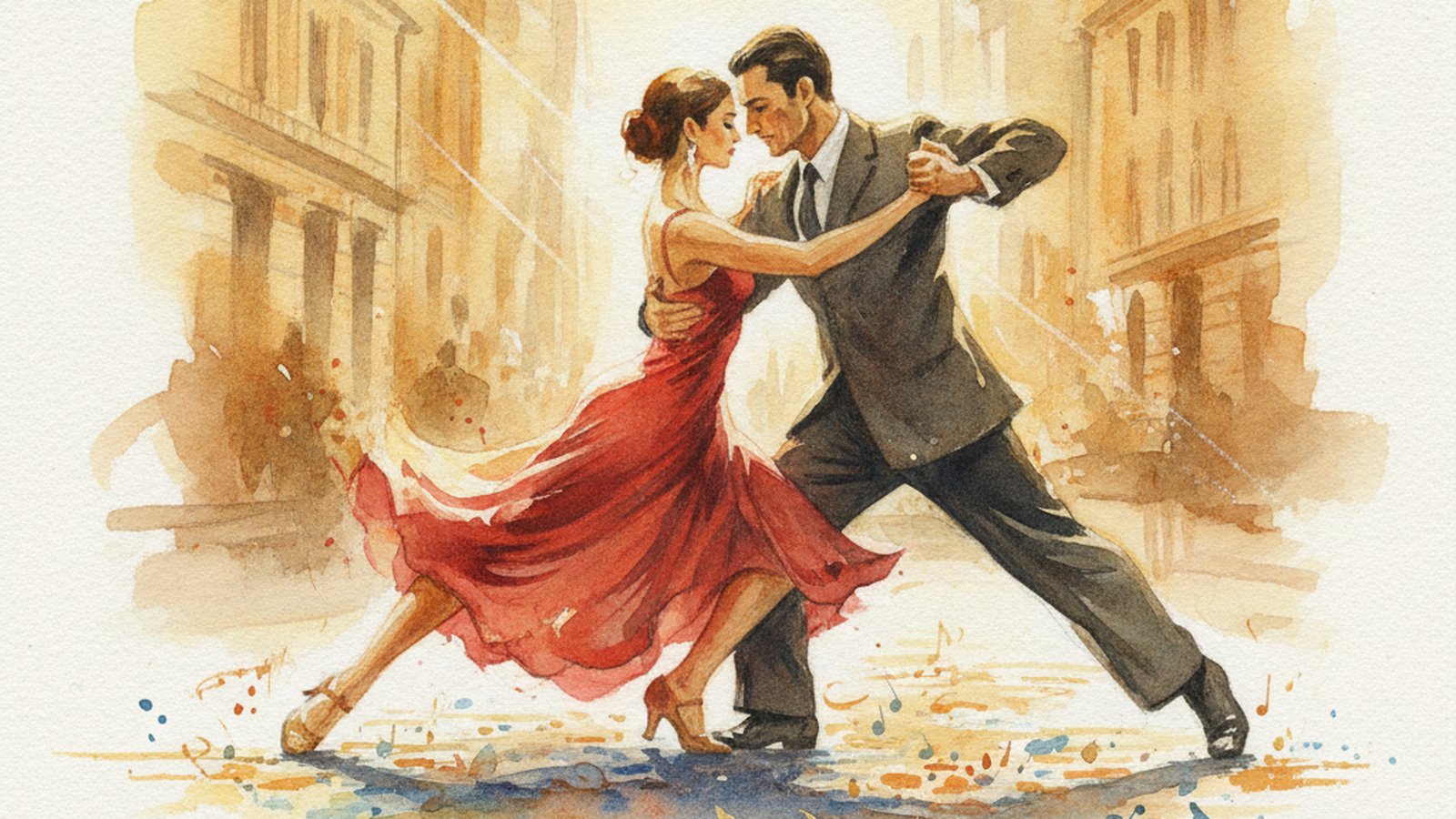
The walk that says everything
Ask a milonguero what matters most in tango and very few will mention the flashy stuff. No high boleos, no dizzying ganchos. They will almost always point to the caminata — the walk. It is the first thing we learn and, quietly, the last thing we ever truly master. A beautiful walk can hold a whole dance together. A musical one can make a stranger across the room want to dance with you.
But here is the thing many of us miss in those early months on the London floor: the walk is not just a way of getting from A to B in the embrace. Done well, it is a musical statement — a sentence spoken in time, in weight, and in feeling. This is what dancers mean by caminata musicale: walking not merely to the music, but with it and about it.
Why the walk carries so much
Tango is unusual among partner dances because so little of it is choreographed vocabulary. Strip away the figures and what remains is two people walking together to an orchestra. That simplicity is exactly why the walk is so expressive. With nothing to hide behind, every step reveals your relationship to the music.
When you simply step on the beat, you are keeping time. Useful, but it is the dance equivalent of reading a sentence in a flat monotone. Musicality begins the moment you decide that not every step should be the same — that some steps arrive early, some linger, some land with weight and others barely whisper. The music stops being a metronome and becomes a conversation partner.
A walk that ignores the music is just transport. A walk that answers the music is tango.
The three ingredients of a musical walk
You do not need to read scores or name every orchestra to walk musically. You need to develop your ear for three things, then let your body respond honestly.
1. Timing — where you place the step
Most beginners glue every step to the strong beat, and that is the right place to start. The next layer is learning to delay. Let your foot hover and arrive a fraction late, riding the tension of the music before resolving onto the beat. A late, deliberate step over a held phrase in a Di Sarli tango feels luxurious. The same delay would feel wrong in a punchy D'Arienzo — there, landing crisply on the beat is the statement.
2. Dynamics — how much weight you give
Music breathes. It swells and softens, and your walk can do the same. A loud, marcato passage invites a grounded, intentional step that presses into the floor. A gentle, legato melody invites a smaller, lighter, more drawn-out one. Changing the quality of your steps — not just their timing — is often what separates a walk that looks correct from one that looks alive.
3. Phrasing — the shape of the sentence
Tango music comes in phrases, usually felt in groups of eight beats that build and release. A musical walker treats a phrase like a sentence: a little build of energy, then a comma to pause, then a full stop at the end of the line. Try walking through a phrase and deliberately pausing as it resolves. That pause is not empty — it is you saying, with your body, I heard that.
Practical ways to build it
This is the part you can take to a practica tonight. None of it requires a partner to start.
- Walk at home with one song on repeat. Pick a clear, steady orchestra — early Di Sarli or D'Arienzo are forgiving — and simply walk your living room. Do it for a whole song. Boredom is where listening begins.
- Choose one tool per song. One playthrough, only pauses. Next playthrough, only weight changes. Layering one element at a time builds real control rather than vague vibes.
- Walk the melody, not just the beat. Try matching your steps to the singer or the lead instrument instead of the percussion. It feels strange at first, then unlocks a whole new register of expression.
- Listen far more than you dance. Put tango on during your commute on the Tube or while cooking. The more familiar the music, the more your body anticipates it without conscious effort.
- Use the pause as punctuation. In the embrace, a well-placed stillness communicates more than another figure. Followers, a musical pause from the lead is an invitation to adorn — fill it.
It takes two: the partner's role
Musicality is not a solo performance smuggled into a partnership. The lead proposes a phrasing; the follower interprets and colours it. A great follower does not just obey timing — they bring their own listening, stretching a step here or adding an adorno in a pause there. The most musical dances happen when both partners are clearly listening to the same orchestra and gently negotiating how to answer it. That negotiation, done in real time, in silence, is one of the quiet miracles of this dance.
A London note
One real advantage of dancing in London is the sheer variety of music you will meet across the week. A traditional milonga in a church hall might lean into golden-age orchestras, while a more alternative night might pull in neo and non-tango tracks. This is a gift for your caminata musicale. Each DJ and each room trains a different part of your ear. Make a habit of arriving early, sitting out a tanda or two, and simply listening to how the experienced dancers around you phrase their walk to whatever is playing. London's floors are full of generous teachers who never call themselves teachers.
And be patient with yourself. A musical walk is not a technique you unlock once; it deepens for as long as you keep dancing. The lovely part is that you can practise it forever, in any pair of shoes, to any tango you love.
Take your walk out dancing
The fastest way to grow a musical walk is to put it on a real floor, with real music, among real people. London gives you a milonga or practica nearly every night of the week — each one a chance to listen, to walk, and to say something with it.
Explore what's on this week at TangoLife.london — find a milonga, bring your ears, and turn your next simple walk into a musical statement.
Related Articles
Caminata Musicale: Turning a Simple Walk Into Musical Art
The tango walk becomes art when it responds to music. Learn how timing, quality, pauses, and orchestra awareness transform your caminata into a musical statement.

How YouTube Changed Tango Learning and Made Us Visual Dancers
YouTube handed London dancers the whole tango archive for free — and quietly taught a generation to learn with their eyes. Here's what it gave us, what it can't teach, and how to watch better.

Tango Vals: How to Dance with Swing and Flow, Not Counting
Vals isn't one-two-three. Learn to step on beat one, add swing with optional steps, and find the continuous, circular flow that makes tango vals feel like flying.