The Follower's Back Step: Tango's Most Underrated Skill
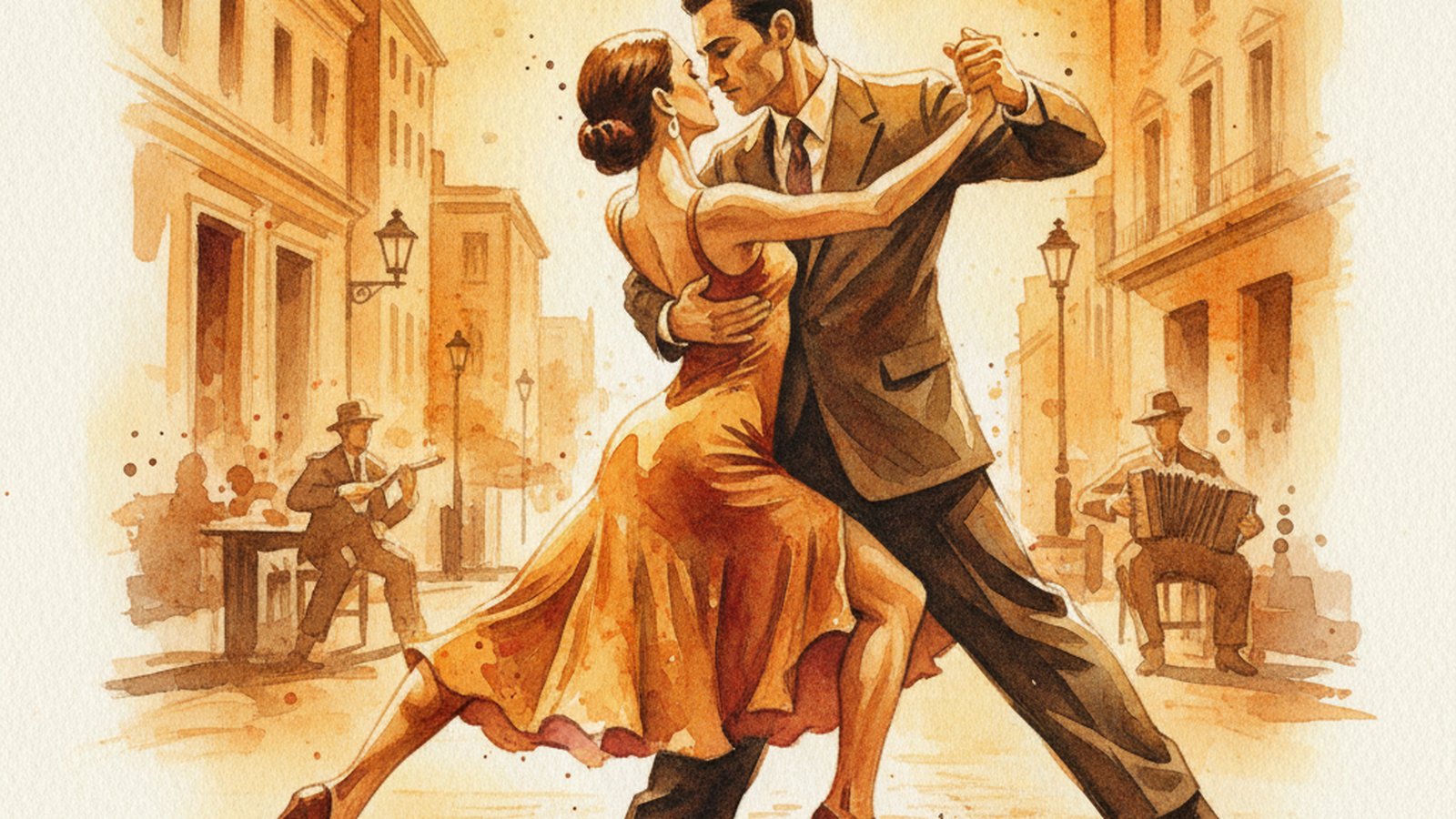
Ask most newcomers what tango is, and they will mime a sharp forward stride, maybe a rose between the teeth. Ask anyone who has danced for a season or two, and a different truth emerges: in close embrace, the follower spends an enormous amount of the dance travelling backwards. Down the line of dance, into space they cannot see, trusting a partner they may have met ninety seconds ago. The humble back step is not a footnote to tango technique. It is the technique.
If you follow, the quality of your back step shapes how every leader feels in your arms. If you lead, the safety and musicality of your dance depends on the back step you are inviting. And in London's gloriously crowded milongas, where a back-ocho can put a heel into a stranger's shin, getting this right is the difference between a dance people remember and one they politely escape.
Why the back step carries so much weight
Think about the geometry of the embrace. When two dancers walk together in the line of dance, the leader most often moves forward and the follower moves back. That single fact means the follower is responsible for the majority of the partnership's backward travel — and doing it blind. You cannot turn your head to check the floor behind you without breaking the embrace, so your back step must be controlled, grounded, and honest about where your weight actually is.
A strong back step does three things at once:
- It keeps you on your own axis, so the leader is dancing with you, not propping you up.
- It buys time and control, so a step can be lengthened, shortened, or stopped mid-flight when the floor demands it.
- It gives clear information back to the leader — your grounded, arrived foot tells them exactly when they can move again.
Weak back steps, by contrast, ripple through everything. Falling back onto the heel, collapsing the posture, or anticipating the next step all force the leader to compensate. The dance starts to feel like a negotiation instead of a conversation.
What a strong back step actually feels like
It begins in the standing leg
The most common misconception is that a back step starts with the foot that moves. It does not. It starts with the leg you are standing on. Before anything travels, you soften the standing knee and let that knee gently send you back. The moving foot is the last thing to arrive, not the first thing to leave. When followers learn to push from the floor through the standing leg, the back step stops feeling like a fall and starts feeling like a controlled extension.
The free leg reaches; it does not stab
As the standing leg sends you, the free leg extends behind you, toes maintaining a light contact with the floor, knees brushing past each other. Reach through the ball of the foot, then the toe, keeping the leg long and the ankle alive. Crucially, no weight transfers until you choose to put it there. That moment of suspension — extended, but not yet committed — is where all your power to lengthen, pause, or change direction lives.
The back step is not a place you fall into. It is a place you arrive at, on time and on balance, ready to leave again.
Arrive soft, arrive whole
When you do transfer, roll the weight onto a soft, slightly bent knee and stack your spine over the new standing foot. You should be able to freeze the dance at any instant and stand there comfortably on one leg. If you would topple, your weight was never truly yours — and the leader felt it long before you did.
The trust problem nobody mentions
Here is the part that is more emotional than technical. Stepping backwards into space you cannot see is, on some animal level, a little frightening. Our instinct is to brace, to lean forward away from the direction of travel, to keep weight in the toes as insurance. Every one of those instincts works against good tango.
The cure is not bravado; it is grounding. The more securely you can find the floor through your standing leg, the less your body needs to brace. Trust in tango is built from the ground up, quite literally. And it is reciprocal: leaders earn a follower's confident back step by giving clear, unhurried invitations and never yanking someone off their axis. If you lead and your follower keeps stepping short or stiffening, look first at whether you are giving them the time to ground each step.
Floorcraft: the back step in a crowded London ronda
Anyone who has danced a packed Saturday night in London knows the floor can be unforgiving. Couples are close, the ronda moves in fits and starts, and a long, uncontrolled back step is how heels meet shins and apologies get muttered. This is where strong back-step technique becomes a courtesy to the whole room, not just to your partner.
Practical floorcraft habits worth building:
- Keep your default back step collected and modest. A grounded, medium step that you fully control beats a glamorous long one you cannot stop.
- Followers: trust the suspension. Because no weight transfers until you commit, you can keep the leg extended and simply not finish a step if the leader holds. That ability to wait is floorcraft gold.
- Leaders: lead into space, not into people. Resist sending a back-ocho or a long back walk into a couple who have just stopped. Use the music's pauses; the milonga always gives you somewhere to put stillness.
- Both of you: keep the heels quiet. A controlled back step lands softly. If your heels are clattering, you are probably arriving on them rather than rolling through the foot.
Drills to build a fearless back step
You do not need a partner to transform this. Ten minutes of focused solo practice before a class or practica pays off fast.
- The slow-motion back walk. Walk backwards across the room as slowly as you possibly can, pausing fully on each axis. If you wobble, you have found a step where your weight was not committed. Repeat until every pause is silent and still.
- Standing-leg sends. Stand on one leg, free leg extended behind, and practise sending yourself back purely by softening the standing knee. Feel the foot push the floor away.
- The freeze test. Dance a back walk to music and have a partner (or your own count) call “freeze” at random. Wherever you are, you should hold cleanly on one axis.
- Wall awareness. Walk slowly backwards toward a wall to retrain your body that stepping back is safe and controllable, not a trust fall.
London is blessed with practicas precisely for this kind of patient, unglamorous work. A practica is where you can stop mid-dance, ask a partner how your back step felt, and try it three more ways. The dancers whose embraces everyone wants to share did not get there by collecting fancy figures — they got there by making the simple things, like walking backwards, feel like silk.
The quiet skill that defines a dancer
It is easy to chase the dramatic vocabulary of tango — the boleos, the ganchos, the sweeping volcadas. But experienced dancers will tell you that they fall for a partner's walk, and especially for a back step that is grounded, generous, and unhurried. It signals presence. It signals trust. It tells you this is someone who is genuinely listening with their whole body.
So the next time you practise, give the back step the attention it quietly deserves. Slow it down, find the floor, and let yourself arrive. Your partners — and the whole ronda — will feel the difference.
Ready to put it into practice? The best way to strengthen your back step is on a real floor with real partners. Browse upcoming milongas, practicas, and classes across the capital on TangoLife.london, find a practica near you this week, and go take a few beautiful steps backwards.
Related Articles
Milonga Lisa vs Con Traspié: Two Ways to Dance One Rhythm
Milonga lisa keeps it smooth; con traspié adds the cheeky syncopation. Here's how to hear, dance, and choose between both on a London floor.
How Followers Communicate Preferences Without Words
Followers communicate constantly through embrace, energy, embellishments, and breath. Learn the silent language that turns tango from monologue into dialogue.
Milonga Lisa vs Milonga Con Traspié: Two Rhythmic Approaches
Milonga lisa gives you steady rhythm; milonga con traspié adds playful syncopation. Learn the difference and when to use each for a joyful milonga experience.